There is no definitive theory regarding the origin of the name “Mount Fuji,” and several theories have been passed down.
The most well-known theories include one that traces the name to the “elixir of immortality” featured in The Tale of the Bamboo Cutter—considered Japan’s oldest story—and another that describes it as “a mountain rich in warriors.”
The Tale of the Bamboo Cutter is a Japanese story compiled during the early Heian period (late 9th century to early 10th century). Although the author is unknown, it is recognized as the oldest surviving Japanese narrative (fictional story).
The Theory Derived from Immortality (The Tale of the Bamboo Cutter)
At the conclusion of The Tale of the Bamboo Cutter, Princess Kaguya, as she returned to the moon, left the “elixir of immortality” with the Emperor. However, having lost the will to live in a world without Princess Kaguya, the Emperor is said to have had the elixir burned at the summit of Japan’s highest mountain. It is believed that the mountain came to be called “Fujiyama” (Mount Fuji) because it was the site where this “elixir of immortality”(不死→Fushi→Fuji) was burned, and eventually, the kanji characters for “Fuji” were applied to the name.
The “Mountain Abundant with Warriors” Theory (The Tale of the Bamboo Cutter)
This is another theory also based on The Tale of the Bamboo Cutter. It is said that because the Emperor sent a large number of soldiers (warriors) to the mountain to burn the elixir of immortality, the mountain came to be known as “Fujisan,” meaning “a mountain abundant with warriors.”
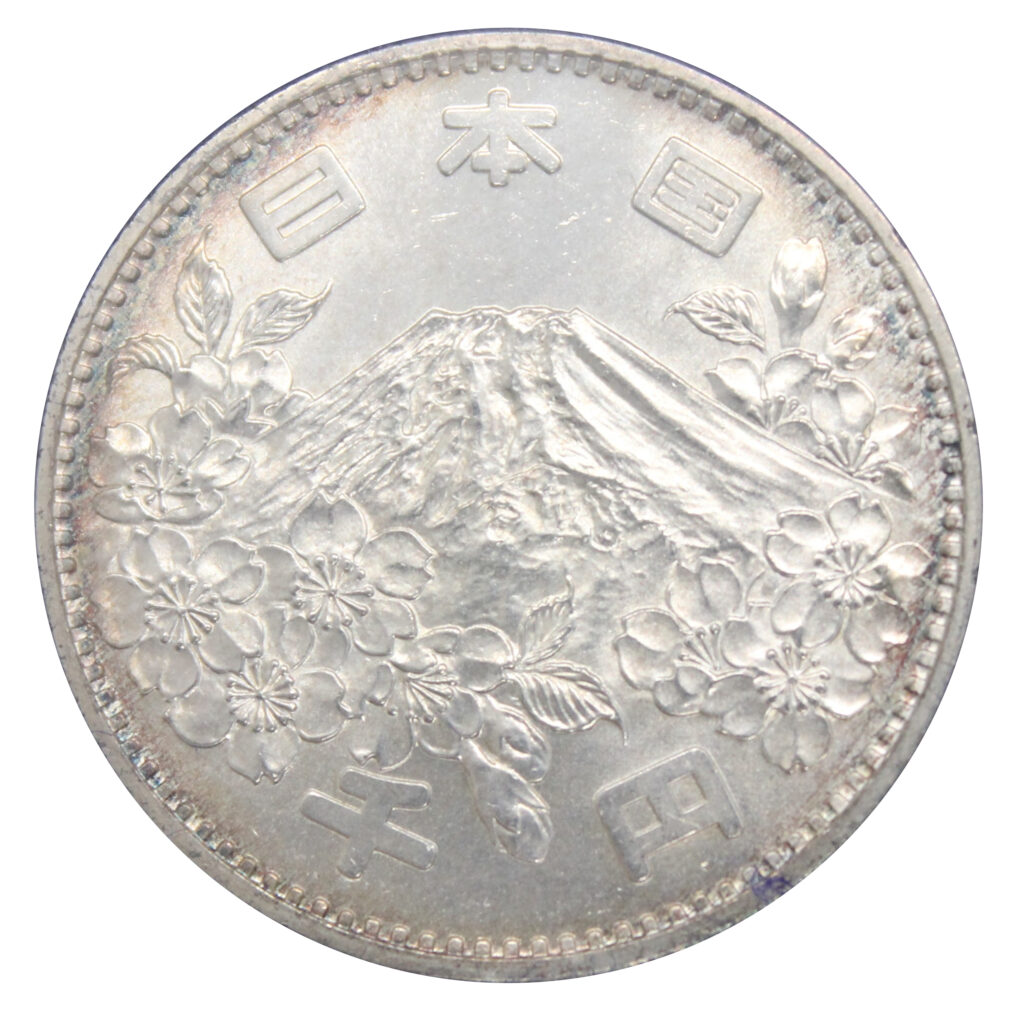
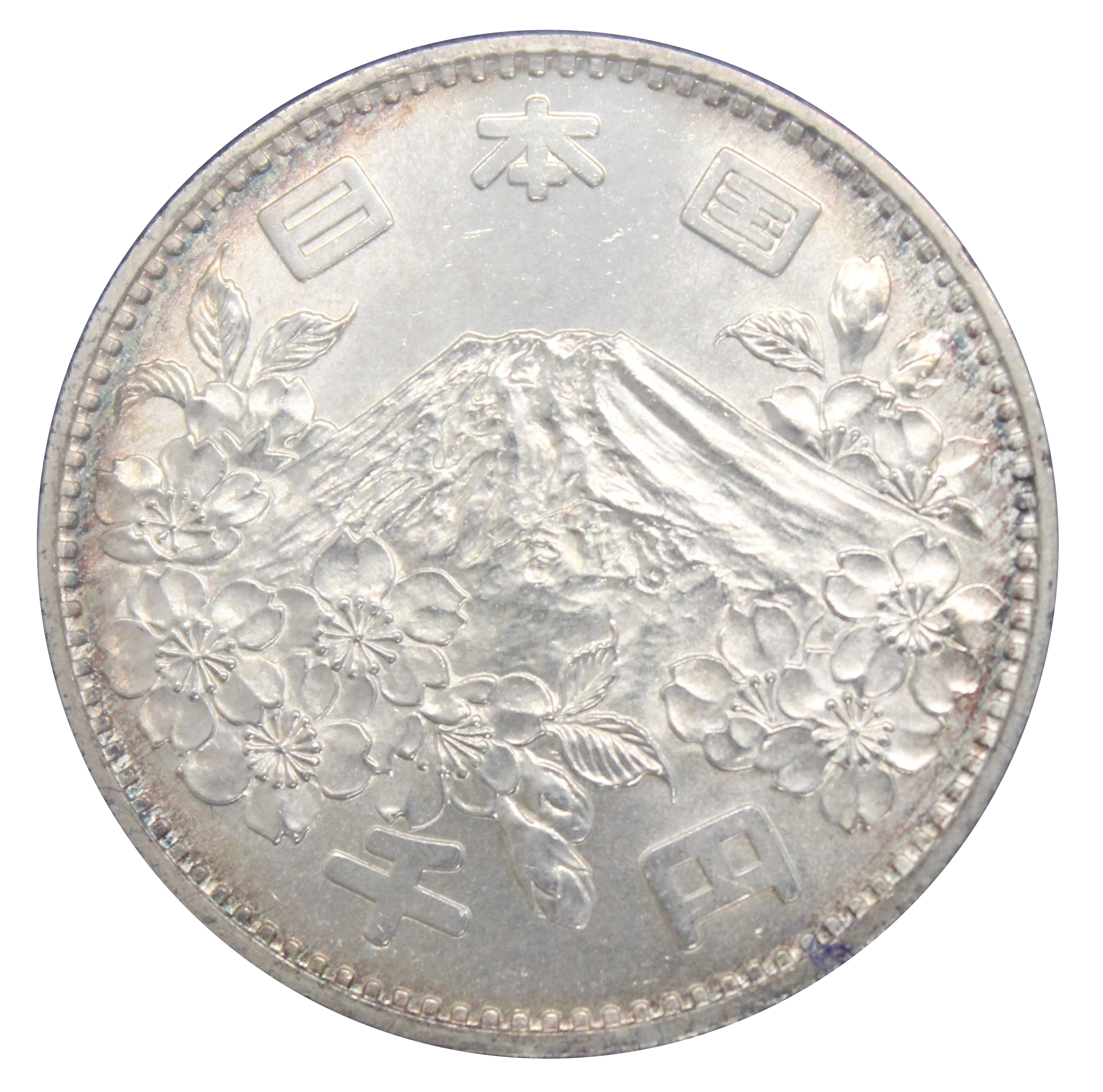
Mount Fuji is depicted on several commemorative coins in Japan.
The coin commemorating the 1964 Tokyo Olympics is one of them.
⇒Go to the page for the 1964 Tokyo Olympics Commemorative 1000 yen Coin