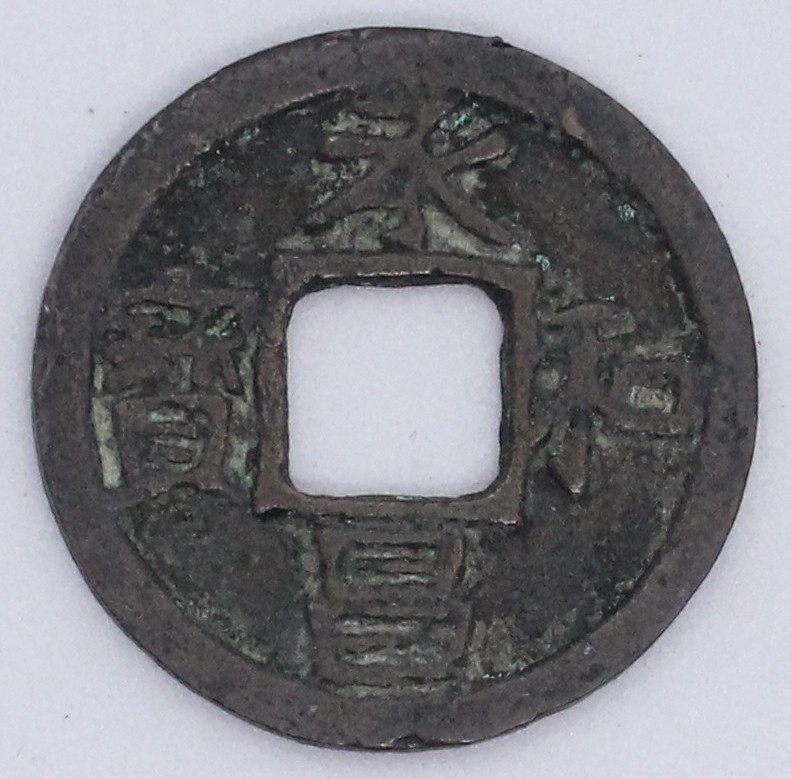
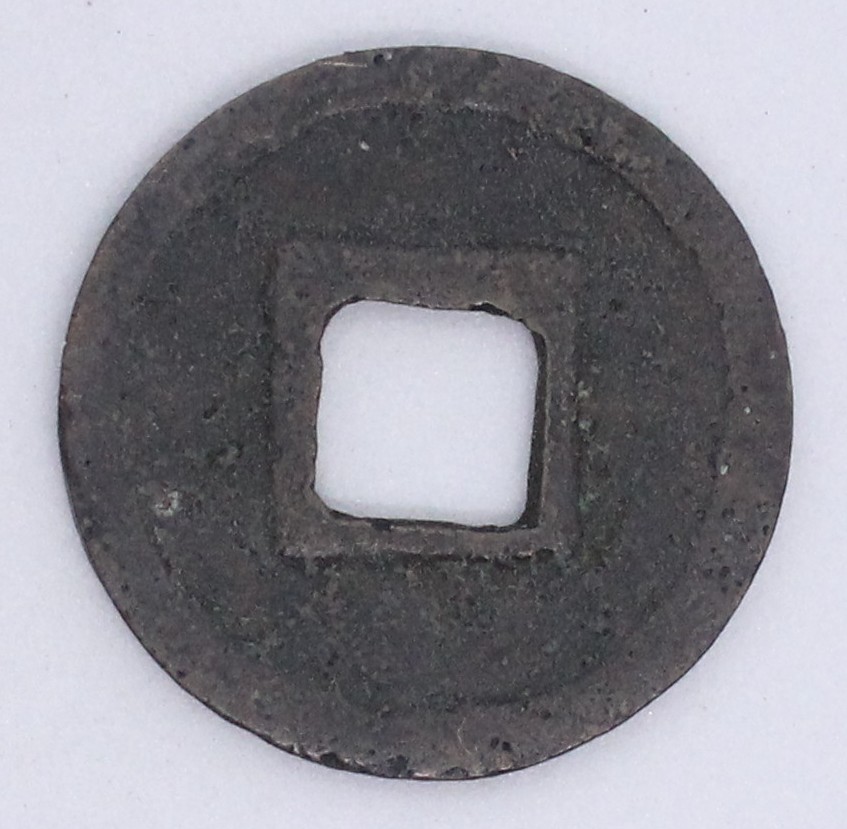
This ancient coin(承和昌宝) is a copper coin that was minted and issued starting in the second year of the Jōwa era (835) during the Heian period. It is considered the sixth coin to be issued among the “Twelve Imperial Coinages.” It is also regarded as Japan’s first currency to feature the era name at the top of the coin’s inscription.
According to the Zoku Nihon Koki, the reason for its issuance was the fluctuation in the value of currency that had occurred over the 16 years since the previous issuance of the Fuju Shinpō coins.
While previous coins had a diameter of 23 to 25 millimeters, the Jōwa coins and those issued thereafter were smaller, measuring 20 to 23 millimeters in diameter.
Twelve coinages minted in Japan during the Nara and Heian periods “Twelve Imperial Coinages “
The Twelve Coins of the Imperial Dynasty are twelve types of coins issued in ancient times. Beginning with the Wadō Kaichin, they were issued in a continuous series; however, the quality of the coins deteriorated over time. Against a backdrop of domestic copper shortages and national financial difficulties, these coins are characterized by a reduction in size compared to earlier coins, as well as a rapid deterioration in copper quality and minting standards.
| Material | Copper |
| Composition | Unknown |
| Weight | 2.5-2.8grams=0.088-0.099oz |
| Diameter | 20-23mm=0.78-0.90in |
| Year of Production | 835(Jōwa 2 year)- |