
A
| A | Kanji | Mean |
| Ashi | 足 | ASHI is a kanji character that means “foot” when written as a single character. However, the character “足” written on the Kan’ei Tsuho coin is a mint mark representing the name of the Ashio Copper Mine where the coin was minted. |
B
| B | Kanji | Mean |
C
| C | Kanji | Mean |
D
| D | Kanji | Mean |
E
| E | Kanji | Mean |
| Ei | 永 | Kanji used in Kan’ei Tsūhō coins, etc. |
F
| F | Kanji | Mean |
G
| G | Kanji | Mean |
| Gaikei | 外径 | The “外径” is the diameter of the coin.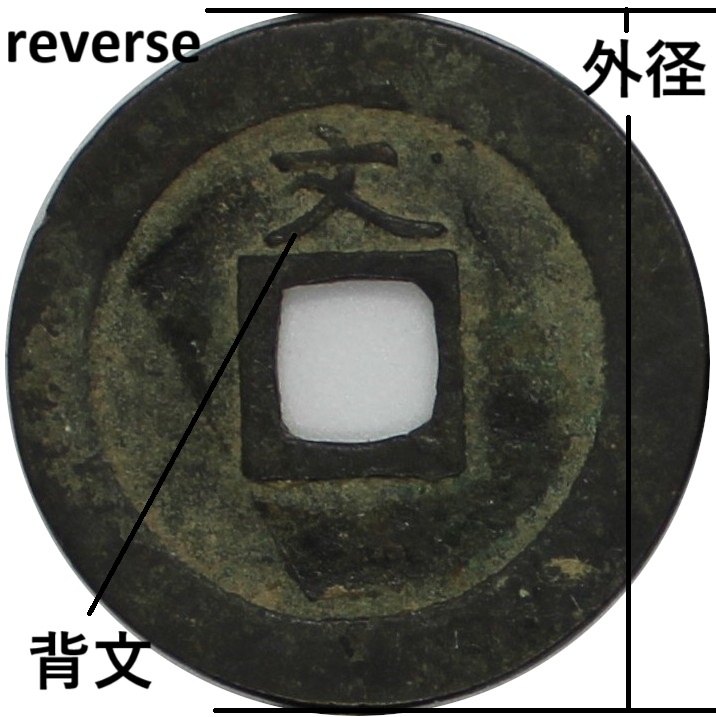 |
H
| H | Kanji | Mean |
| Haibun | 背文 | The term “背文” refers to the “文” on the reverse side of the Kan’ei Tsuuho.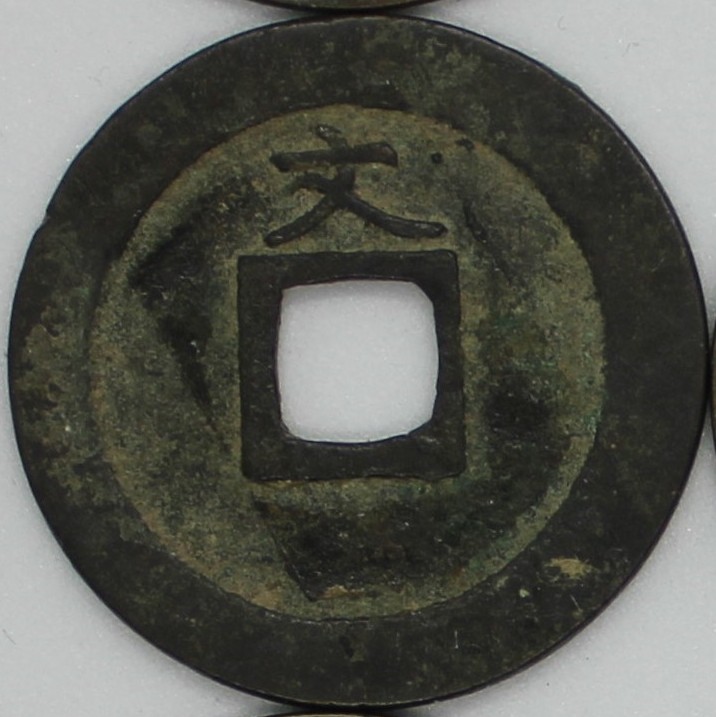 |
| Haisen | 背仙 | Kan’ei Tsūhō coins with the character “仙” on the reverse side.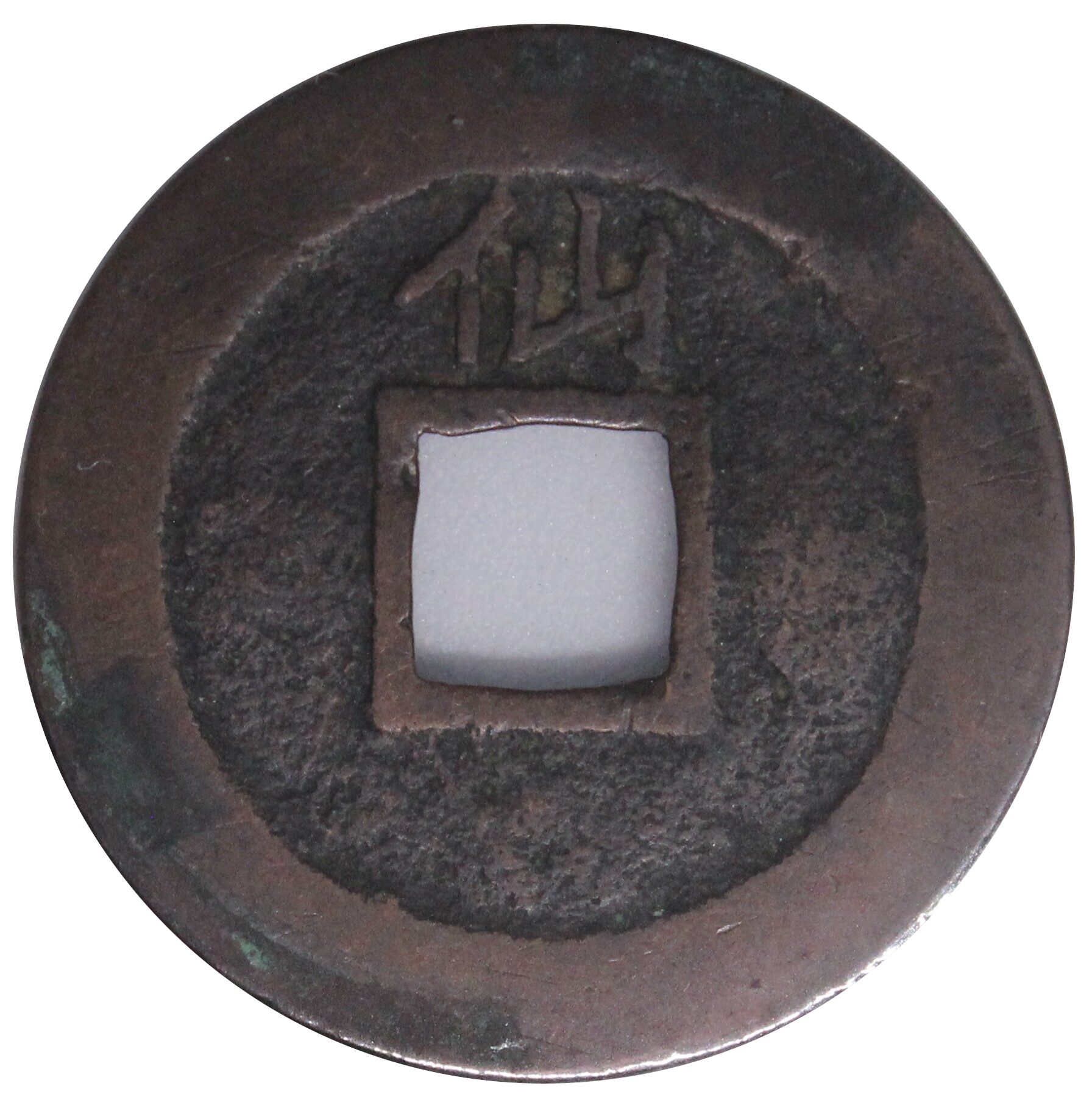 |
| Heisei | 平成 | This is aJapanese era name.1989-2019 |
| Ho,Hou | 寶,宝 | Kanji used in Kan’ei Tsūhō coins, etc. It means “treasure.” It is mainly used in relation to money. |
I
| I | Mean | |
J
| J | Kanji | Mean |
| Jōwa | 承和 | Jōwa era.An era name from the Heian period. It spanned the years 834 to 848 AD. |
| Jyuki-tsu | 重揮通 | One type of “通” character.A type found in the Sendai Ishinomaki coins of the Kan’ei Tsūhō series.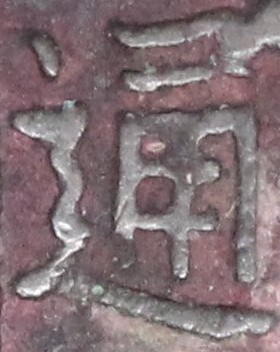 |
K
| K | Kanji | Mean |
| Kaku | 郭 | The “郭” is the raised area around the hole in the center of the coin. |
| Kan | 寛 | Kanji used in Kan’ei Tsūhō coins, etc. |
| Kanei | 寛永 | Kan’ei era (1624-1644). Kan’ei is the original name of Japan’s Edo period |
| Kan’ei Tsuuho | 寛永通宝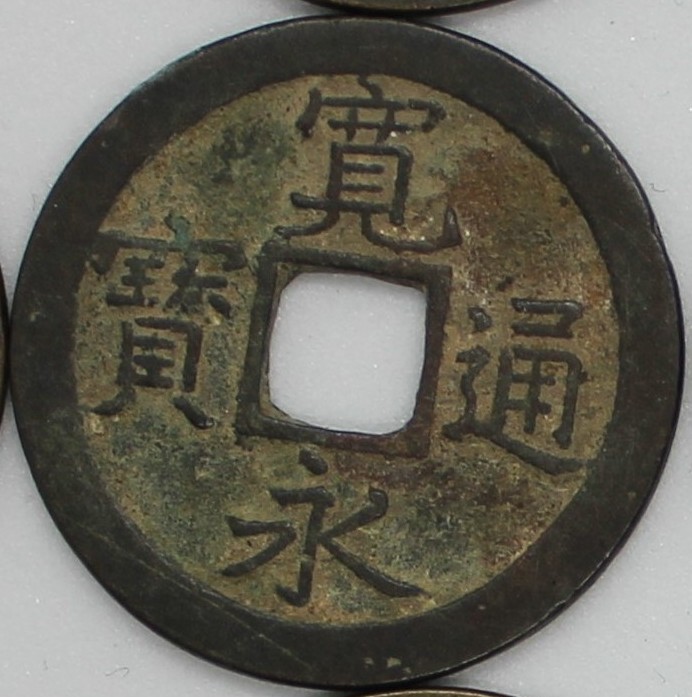 | 寛(kan) 永(ei) 通(tsu) 寶(ho) The name 寛永“Kan’ei” comes from the fact that it was first cast during the Kan’ei era (1624-1644). 通宝(tsu ho) means “world-class treasure” and refers to coins that are widely circulated in general circulation. ⇒Shin(New)-Kanei Sen |
| Koto-tsu | コ頭通 | 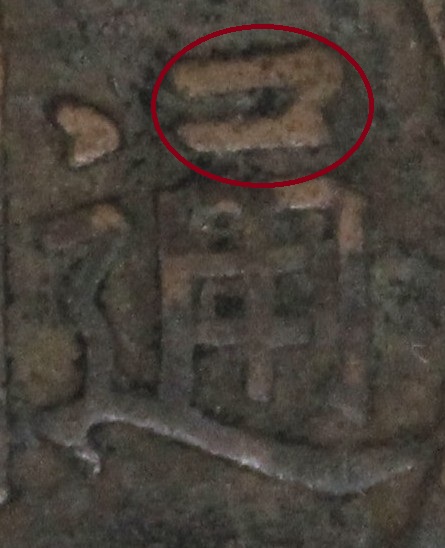 One type of character in “通.” It contains the character “コ.” |
| Kocho Junisen | 皇朝十二銭 | “twelve coinages minted in Japan during the Nara and Heian periods” ⇒Japanese Old Coin Page |
L
| L | Kanji | Mean |
M
| M | Kanji | Mean |
| Meiji | 明治 | This is aJapanese era name.1868-1912 |
| Muhai | 無背 | The Kan’ei Tsūhō coins with no characters on the reverse side.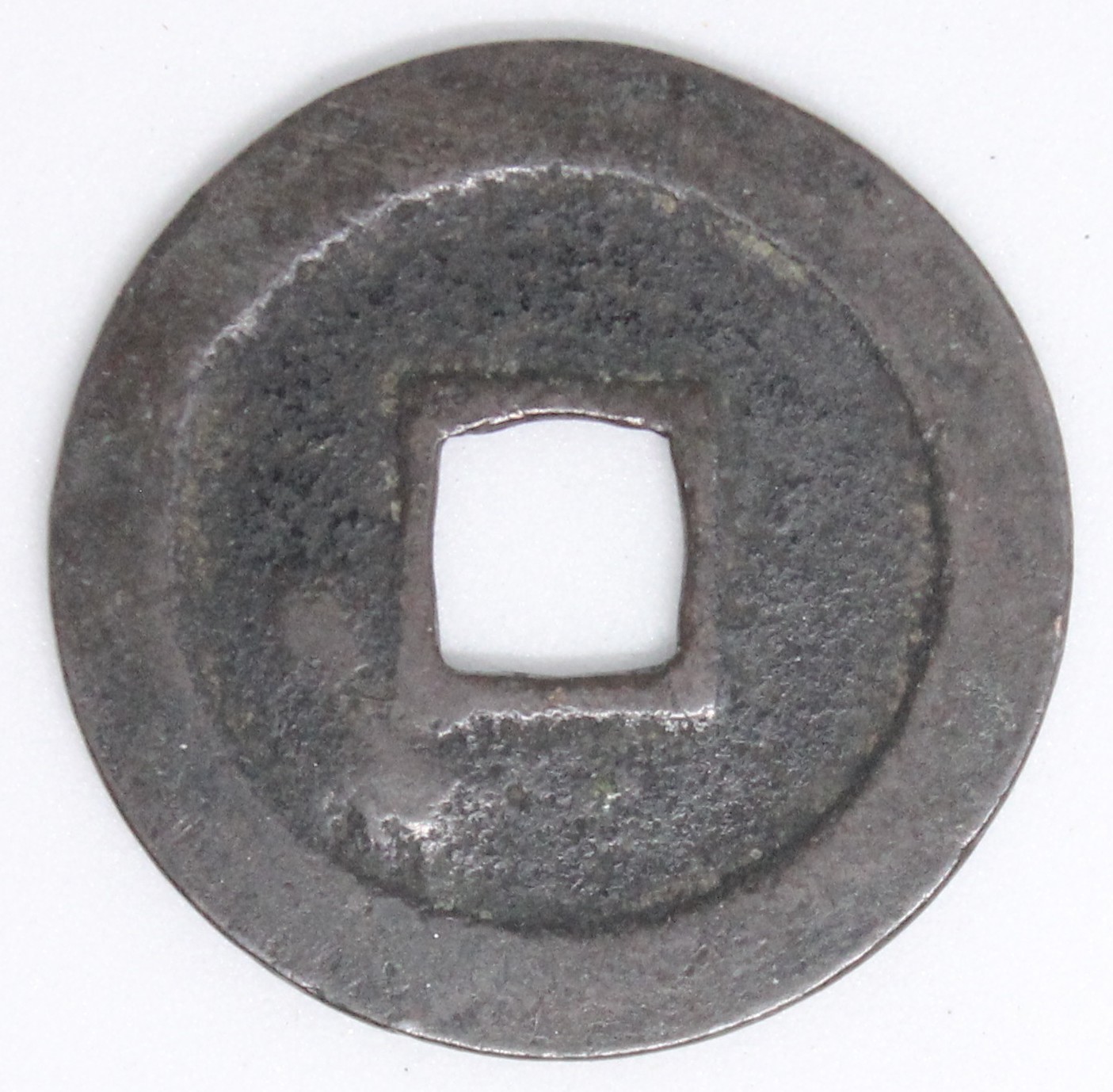 |
N
| N | Kanji | Mean |
| Naikei | 内径 | 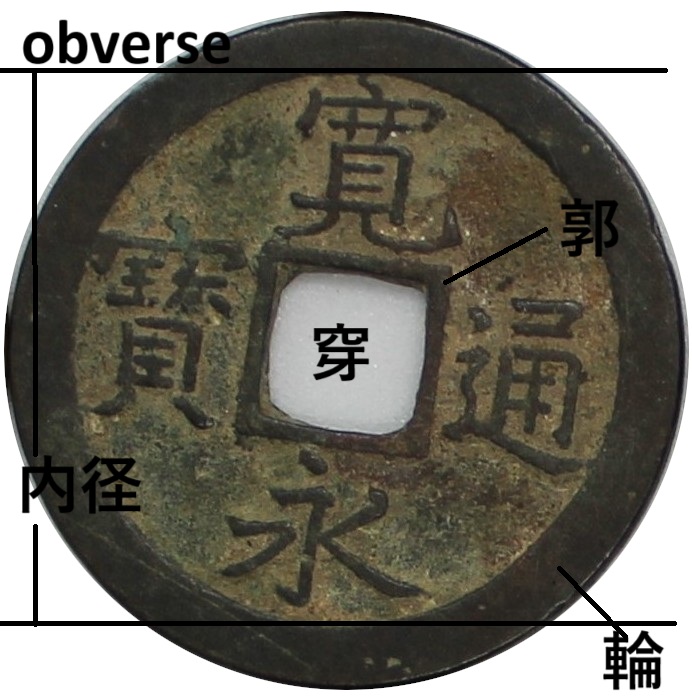 The “内径” is the inner diameter of the coin. |
O
| O | Kanji | Mean |
P
| P | Kanji | Mean |
Q
| Q | Kanji | Mean |
R
| R | Kanji | Mean |
| Reiwa | 令和 | 2019- |
| Rin | 輪 | The “輪” is the outer ring-shaped portion of the coin. |
S
| S | Kanji | Mean |
| Sen | 穿 | The “穿” is the hole in the center of the coin. |
| Sen | 銭 | Kanji characters meaning “Coin”. Example: Tenpo sen(天保 銭),〇〇sen |
| Showa | 昭和 | This is aJapanese era name.1926-1989 |
T
| T | Kanji | Mean |
| Taishou,Taisho | 大正 | This is aJapanese era name.1912-1926 |
| Tsu | 通 | Kanji used in Kan’ei Tsūhō coins, etc. |
| Tsuho | 通宝 | 通宝(tsu ho) means “world-class treasure” and refers to coins that are widely circulated in general circulation. |
U
| U | Kanji | Mean |
V
| V | Kanji | Mean |
W
| W | Kanji | Mean |
X
| X | Kanji | Mean |
Y
| Y | Kanji | Mean |
Z
| Z | Kanji | Mean |