JNDA# 07-41
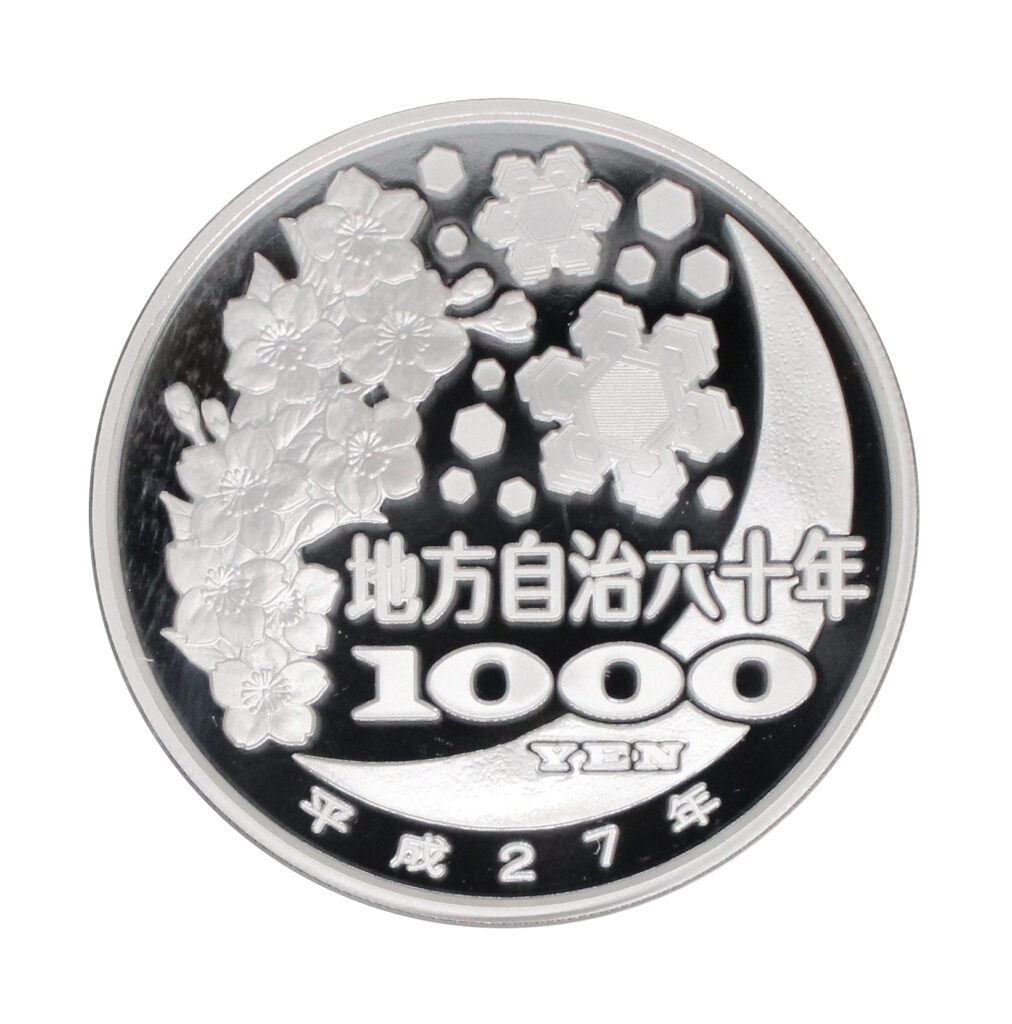
| Material | Silver |
| Composition | Pure Silver |
| Weight | 31.1grams=1.09oz |
| Diameter | 40mm=1.57in |
| Year of Production | 2015(Heisei 27 year) |
These silver coins were issued to commemorate the enforcement of Japan’s Local Autonomy Law.
Each of the 47 prefectures has its own unique design.
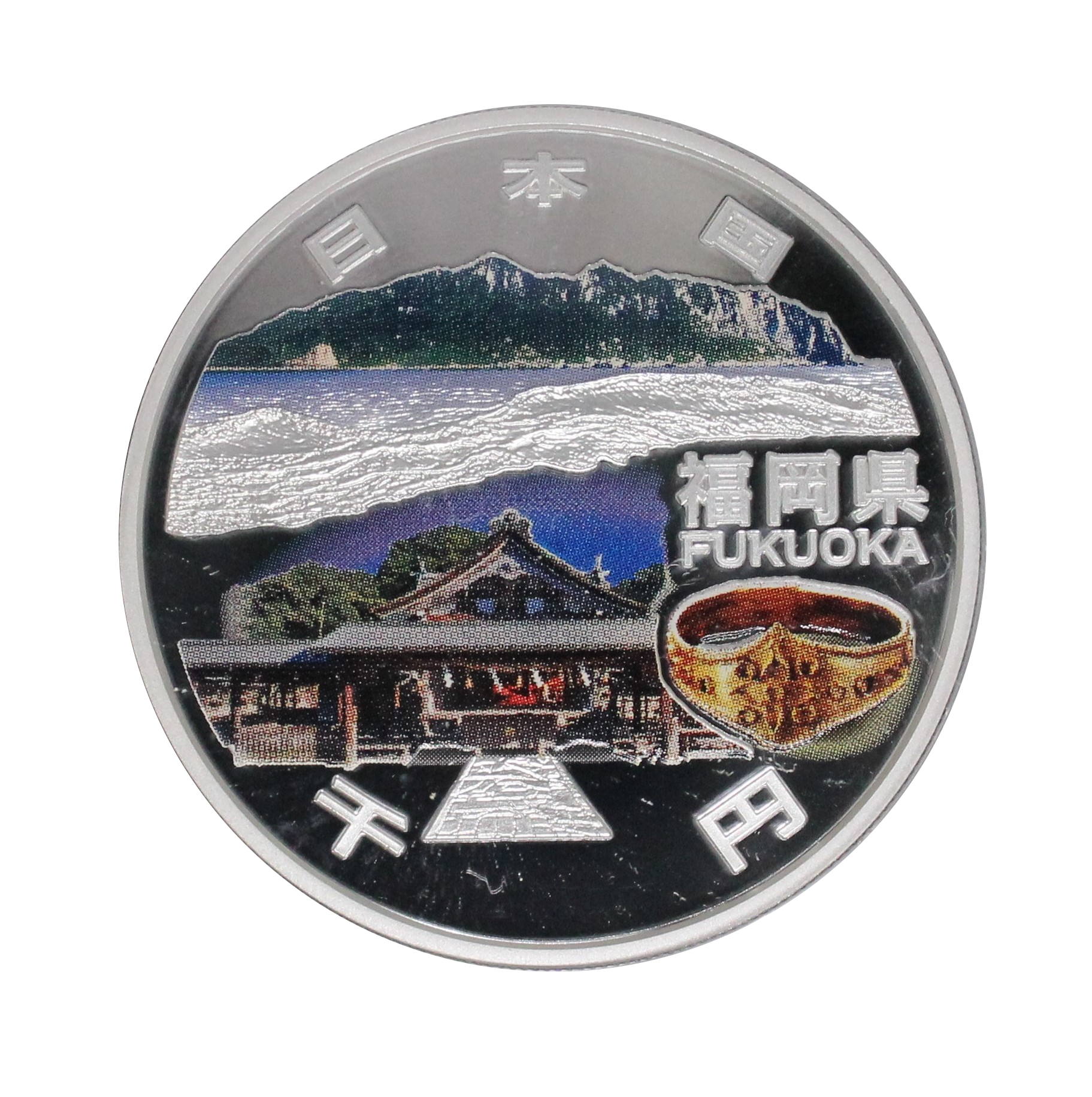
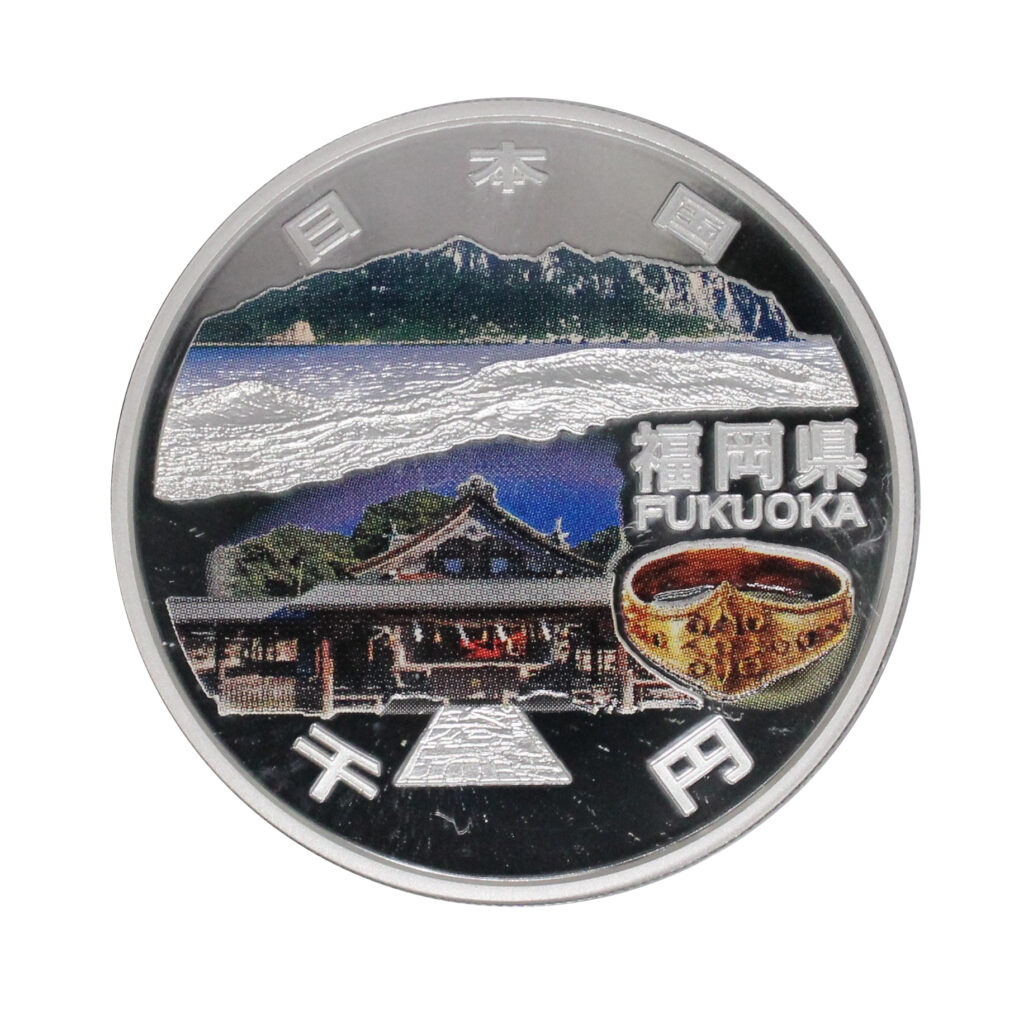
The Fukuoka Prefecture coin depicts Okinoshima, Munakata Taisha Shrine, and the national treasure, the gold ring.
Okinoshima
Okinoshima is a remote island in the Genkai Sea where national rituals were performed from the late 4th century to the end of the 9th century to pray for successful foreign relations and safe voyages.
Known as the “Shosoin of the Sea,” its 22 ritual sites are well-preserved, and all approximately 80,000 excavated offerings are designated National Treasures.
Munakata Taisha
Munakata Taisha is a shrine complex comprising three shrines: Okitsumiya on Okinoshima, Nakatsumiya on Oshima, and Hetsumiya on Tashima.
It enshrines the Munakata Three Goddesses, who guarded the maritime route to the Korean Peninsula, known as the “Kaihoku-dōchū.” The main hall and worship hall of Hetsumiya are designated Important Cultural Properties of Japan.
Gold Ring
One of the artifacts excavated from Okinoshima. Similar rings have also been unearthed from the Silla royal tombs in Gyeongju, Korea, leading to the belief that this ring was brought from Silla during the Three Kingdoms period of the Korean Peninsula. It was designated a National Treasure in 1962 (Showa 37).