Ancient Asuka period
Mumon ginsen(無文銀銭) 667?AD-672?AD
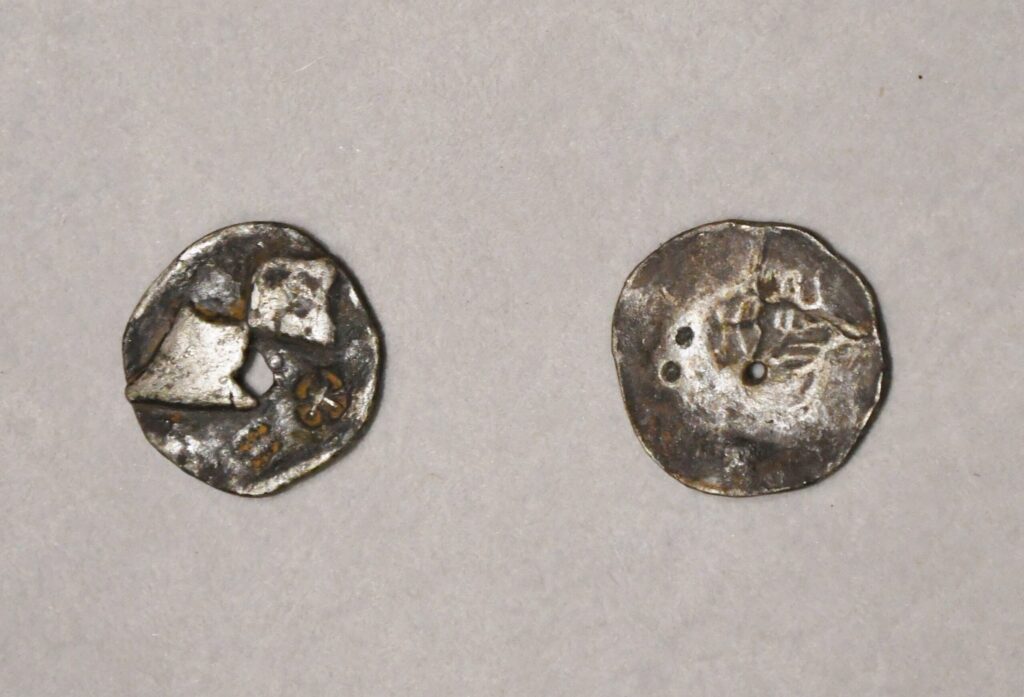
- Photograph of an Unmarked Silver Coin1
Unmarked silver coins (mumon ginsen) are circular silver coins minted in Japan during the late 7th century (Asuka period, reigns of Emperor Tenji and Emperor Tenmu). They lack inscriptions or patterns on their surfaces. Measuring approximately 3 cm in diameter and weighing about 10 g, they were weight-based currency traded for their intrinsic silver value. It is highly likely to be Japan’s oldest cast coin, circulating in an era preceding the Wado Kaichin (708).
Fuhonsen (富本銭) 683AD
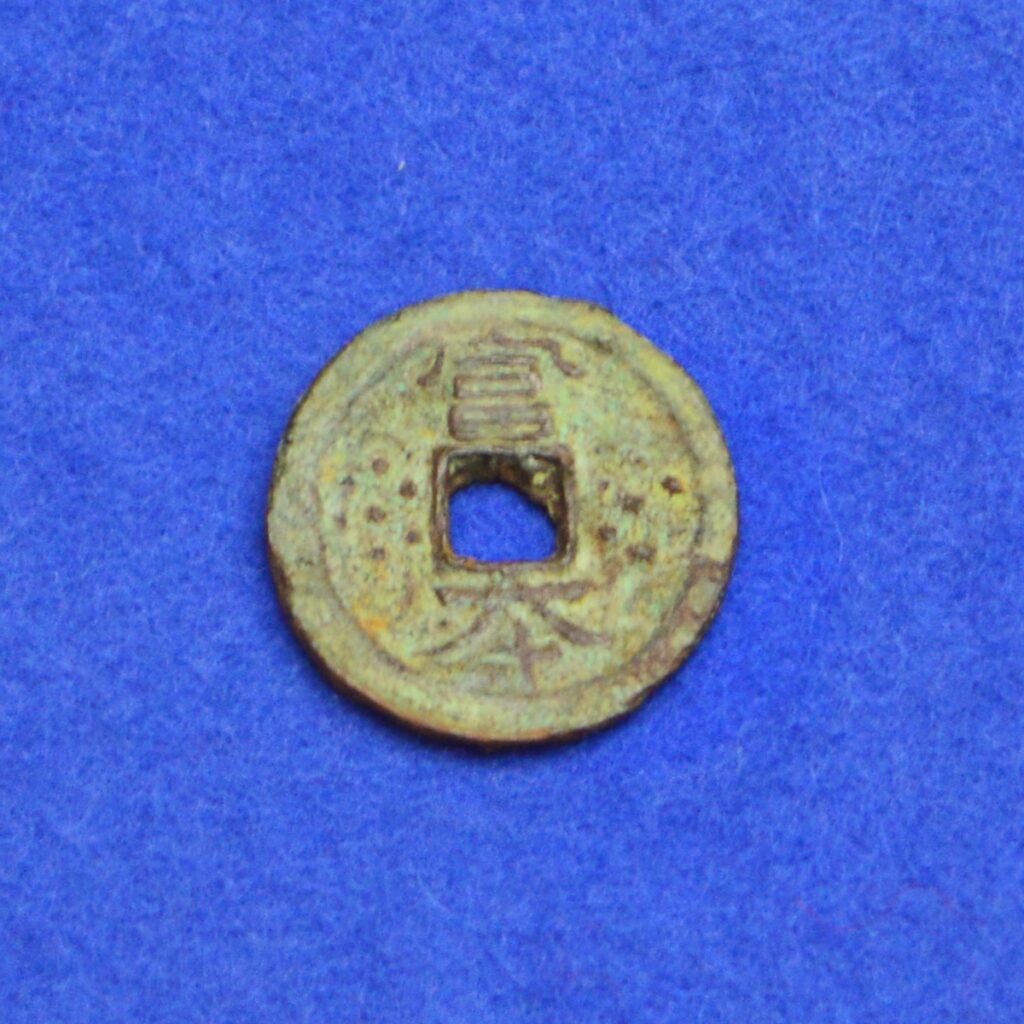
The Fuhonsen is a currency estimated to have been minted in Japan around 683 (the 12th year of Emperor Tenmu’s reign). Its casting date is considered to predate the Wado Kaichin, issued in 708 (the first year of the Wadō era). Academic opinion is divided on whether this coin actually circulated or was used for magical purposes.
Sakurai City Buried Cultural Properties Center Exhibition
Nara period
Wado Kaichin(和同開珎) 708-765AD
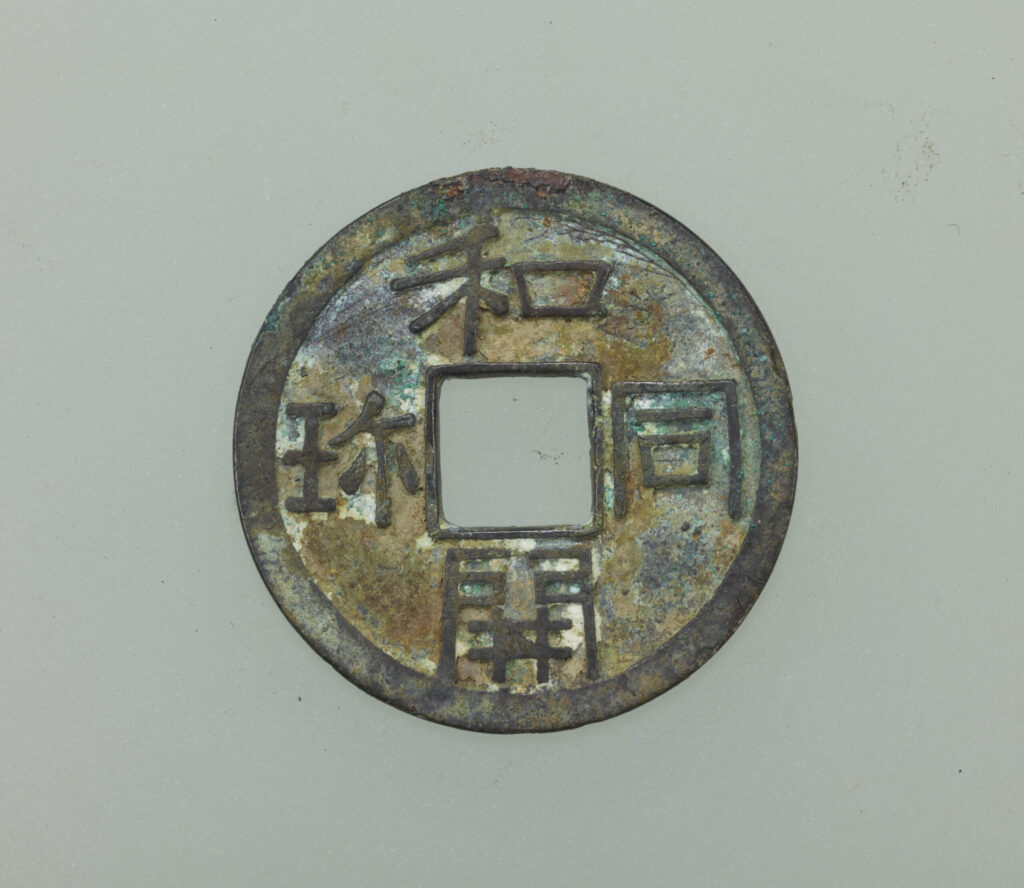
https://commons.wikimedia.org/wiki/File:Wad%C5%8Dkaichin_found_at_S%C5%ABfuku-ji_Temple_Site_TNM_front.jpg

The Wado Kaichin (Wado Kaichin/Wado Kaihou) was Japan’s first metal coin, issued in 708 (the first year of the Wado era). It was the first coin of the Imperial Twelve Coins series and was once considered Japan’s oldest cast coin, but with the discovery of the Fuhon sen(coin), it is now recognized as “Japan’s oldest circulating coin.”
Kaiki Shōhō (開基勝宝) 760AD
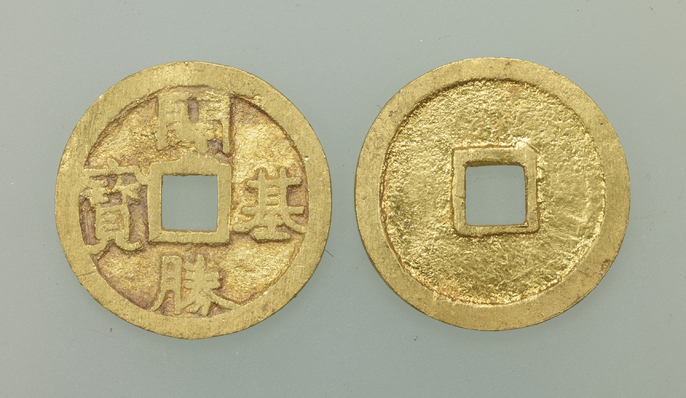
奈良県奈良市伏見出土の開基勝宝(東京国立博物館所蔵、重要文化財):国立文化財機構
CC BY 4.0
https://commons.wikimedia.org/wiki/File:Kaikish%C5%8Dh%C5%8D_TNM_front_and_back.jpg

The Kaiki Shōhō (開基勝宝) was Japan’s first coin, minted and issued in 760 (the 4th year of the Tenpyō Hōji era) during the Nara period. Thirty-two examples survive today.
Taihei Genpō(大平元寶) 760AD
The Taihei Genpō is a silver coin recorded in the official history of the Nara period. Historical records confirm it was established in 760 alongside the copper coin Mannen Tōhō and the gold coin Kaiki Shōhō, but no genuine specimens have been discovered.
Kakō/Kokō(賈行) 760AD?
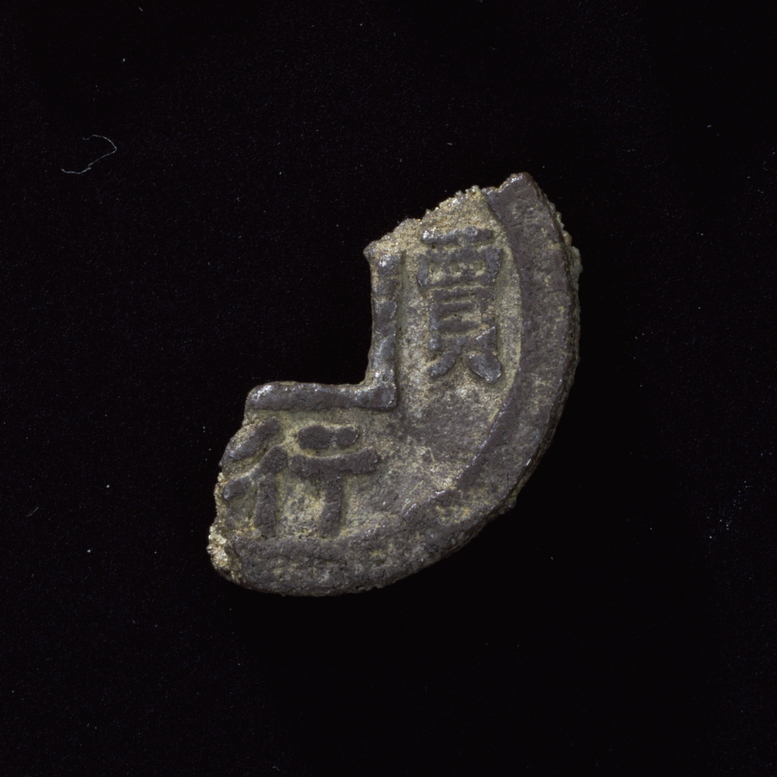

Kakō is a silver coin believed to have been issued in the late Nara period. It is thought to have been issued around the same time as Kaiki Shōhō, Japan’s first coin. Only one fragment bearing the two characters “Kakō” has been discovered, so details remain unknown. No coins bearing these two characters have been recorded in historical records either in Japan or on the Chinese mainland, making it a mysterious silver coin.
Kocho Junisen(皇朝十二銭) “twelve coinages minted in Japan during the Nara and Heian periods” 708-963AD
Kōchō Jūnisen (皇朝十二銭) (also known as Jūnizeni) is a general term for 12 types of copper coins minted in Japan under the Ritsuryō system from 708 (Wadō 1st year) to 963(Ōwa 3rd year).“十二銭” refers to the fact that there are twelve different types.
| Source | Inscription Period minted | |
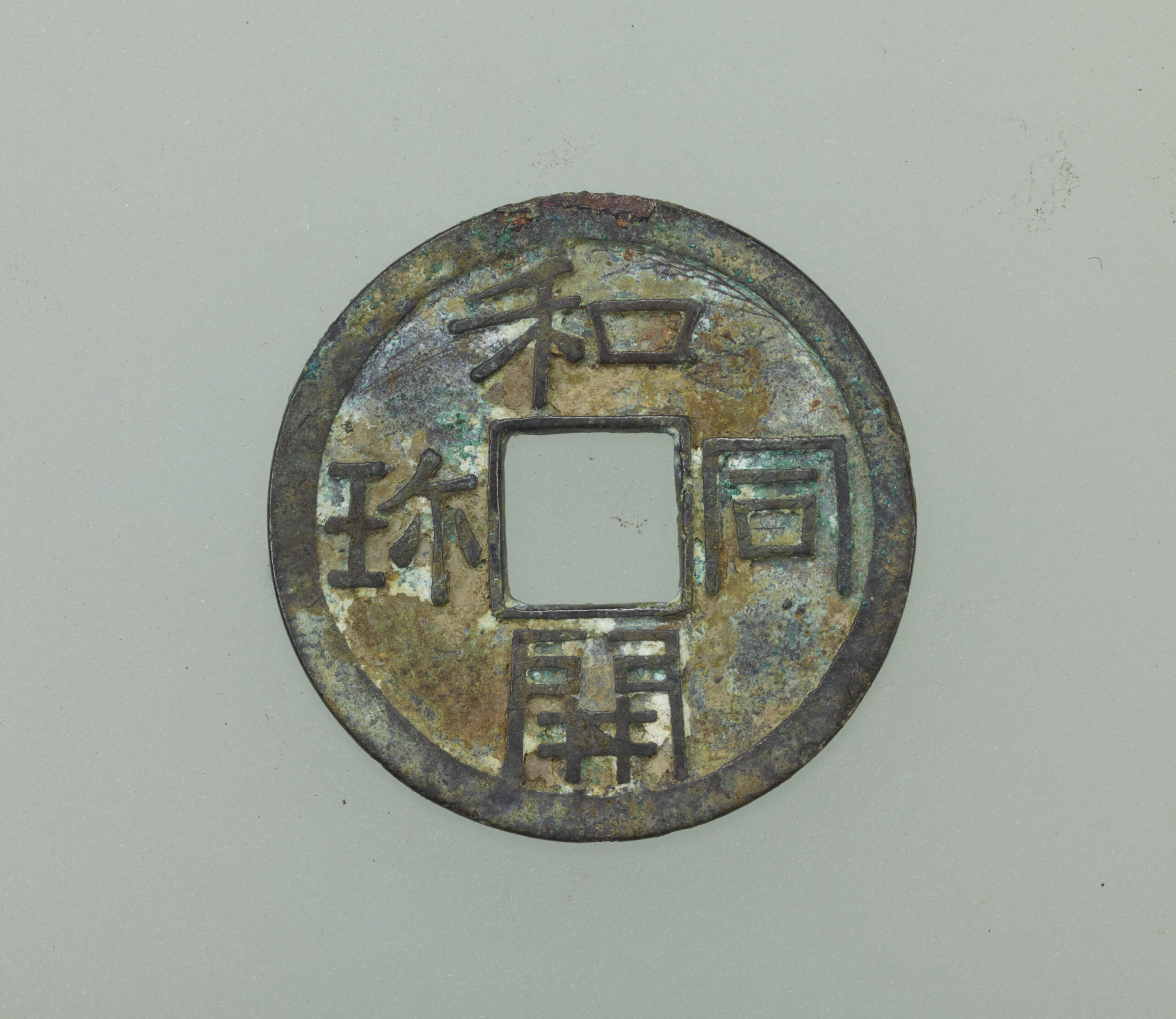 | 滋賀県大津市・崇福寺跡出土の和同開珎(東京国立博物館所蔵):国立文化財機構 CC BY 4.0 https://commons.wikimedia.org/wiki/File:Wad%C5%8Dkaichin_found_at_S%C5%ABfuku-ji_Temple_Site_TNM_front.jpg | Wado Kaichin/Wado Kaihou 和同開珎 708AD-765?AD |
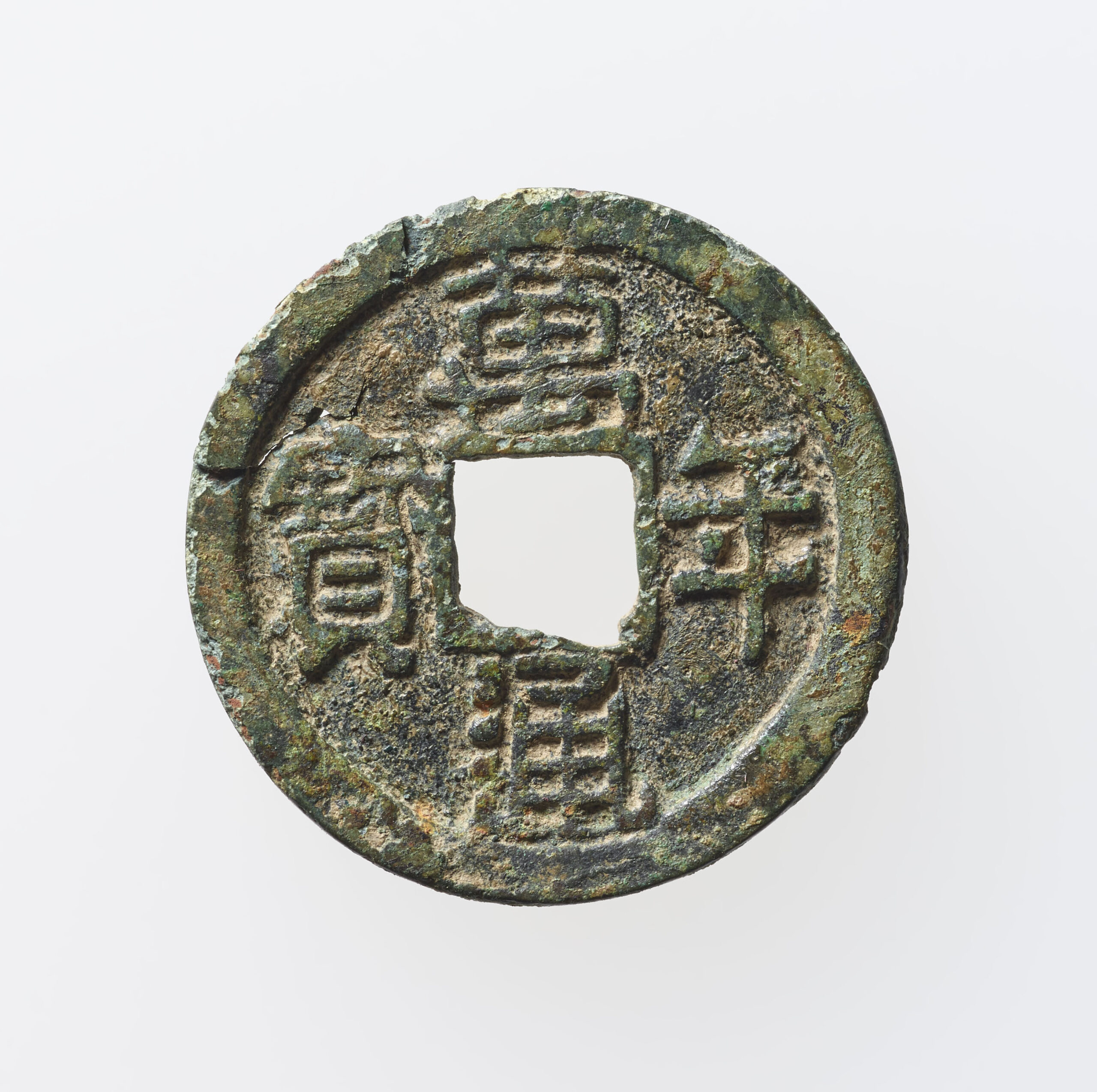 | 奈良県五條市霊安寺町出土の万年通宝(奈良国立博物館所蔵):国立文化財機構 CC BY 4.0 https://commons.wikimedia.org/wiki/File:Man%27nents%C5%ABh%C5%8D_1059-8_Nara_National_Museum.jpg | Mannen Tsūhō 万年通宝 760AD- |
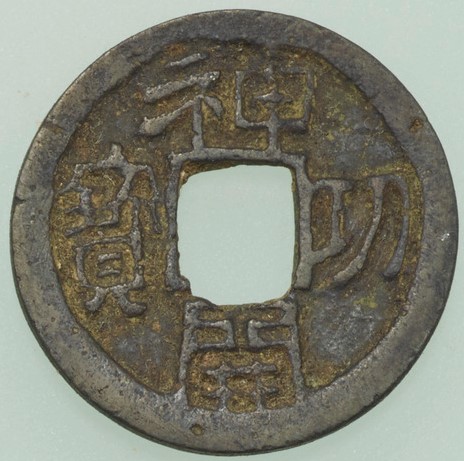 | 東京国立博物館所蔵の皇朝十二銭のうち神功開宝(町田久成寄贈):国立文化財機構 CC BY 4.0 https://commons.wikimedia.org/wiki/File:Jing%C5%ABkaih%C5%8D_TNM_E-3470.jpg | Jinkou Kaihō/Jingo Kaihō/Jingu Kaihō 神功開宝 765AD- |
| Heian period | 794AD- | |
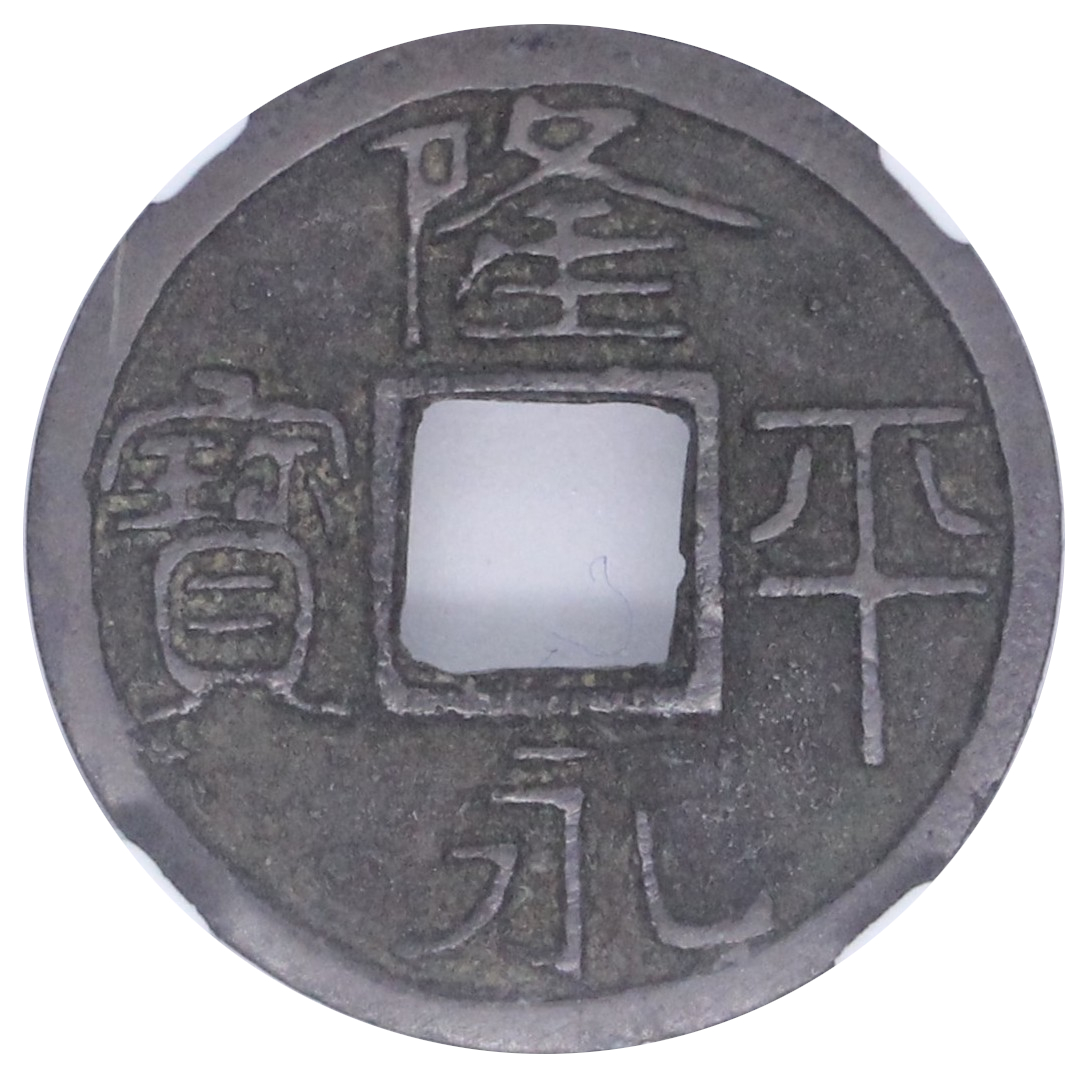 | No.4 | Ryuhei Eihō 隆平永宝 796AD-817AD |
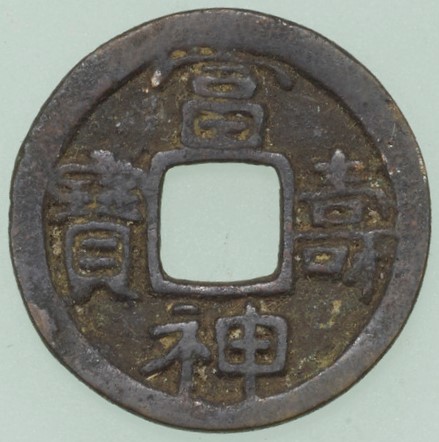 | 東京国立博物館所蔵の皇朝十二銭のうち富寿神宝(町田久成寄贈):国立文化財機構 CC BY 4.0 https://commons.wikimedia.org/wiki/File:Fujushinp%C5%8D_TNM_E-3470.jpg | Fuju Shinpo 富寿神宝 818AD- |
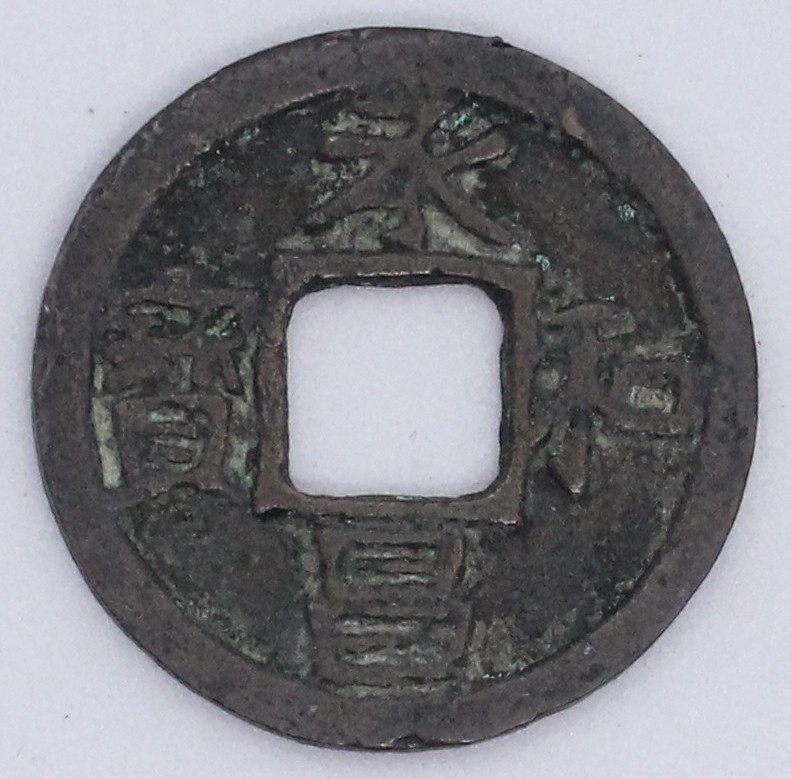 | No.6 | Jowa Shoho 承和昌宝 835AD- |
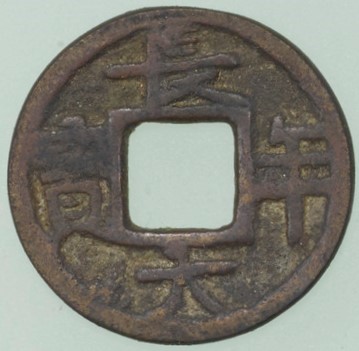 | 東京国立博物館所蔵の皇朝十二銭のうち長年大宝(町田久成寄贈)):国立文化財機構 CC BY 4.0 https://commons.wikimedia.org/wiki/File:Ch%C5%8Dnentaih%C5%8D_TNM_E-3470.jpg | Chōnen Taiho 長年大宝 848AD- |
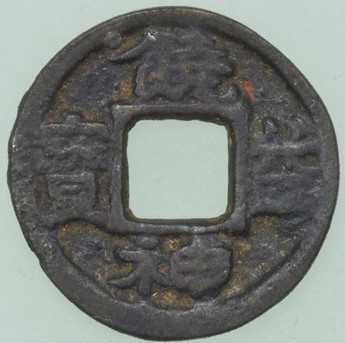 | 東京国立博物館所蔵の皇朝十二銭のうち饒益神宝(町田久成寄贈):国立文化財機構 CC BY 4.0 https://commons.wikimedia.org/wiki/File:J%C5%8Dekishinp%C5%8D_TNM_E-3470.jpg | Jyōeki Shinpo/Nyōyaku Shinpo/Nyōeki Shinpo饒益神宝859AD- |
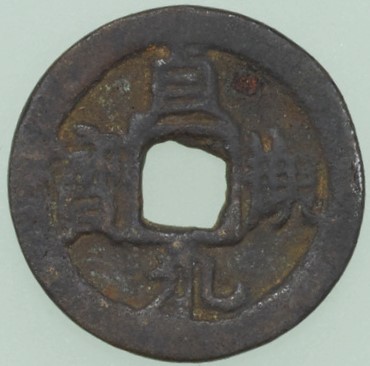 | 東京国立博物館所蔵の皇朝十二銭のうち貞観永宝(町田久成寄贈):国立文化財機構 CC BY 4.0 https://commons.wikimedia.org/wiki/File:J%C5%8Dgan%27eih%C5%8D_TNM_E-3470.jpg | Jōgan Eihō 貞観永宝 870AD- |
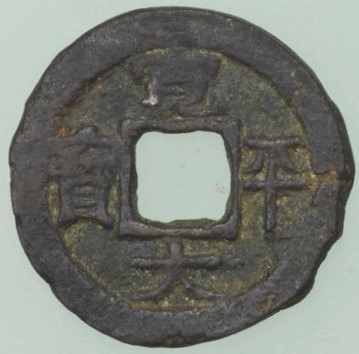 | 東京国立博物館所蔵の皇朝十二銭のうち寛平大宝(町田久成寄贈):国立文化財機構 CC BY 4.0 https://commons.wikimedia.org/wiki/File:Kanpy%C5%8Dtaih%C5%8D_TNM_E-3470.jpg | Kanpyo Taihō 寛平大宝 890AD- |
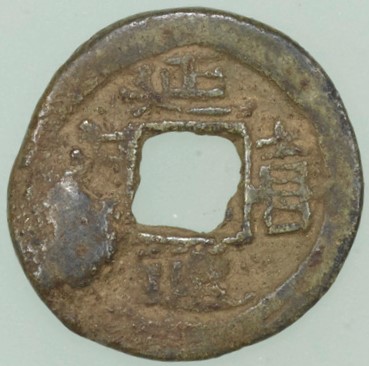 | 東京国立博物館所蔵の皇朝十二銭のうち延喜通宝(町田久成寄贈):国立文化財機構 CC BY 4.0 https://commons.wikimedia.org/wiki/File:Engits%C5%ABh%C5%8D_TNM_E-3470.jpg | Engi-Tsūhō 延喜通宝 907AD- |
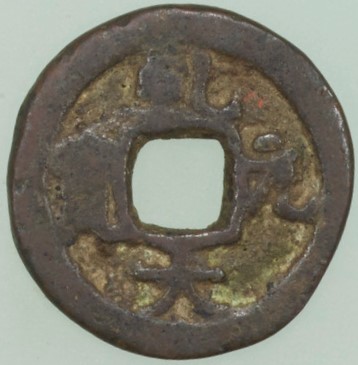 | 東京国立博物館所蔵の皇朝十二銭のうち乾元大宝(町田久成寄贈):国立文化財機構 CC BY 4.0 https://commons.wikimedia.org/wiki/File:Kengentaih%C5%8D_TNM_E-3470.jpg | Kengen Taiho 乾元大宝 958AD-963AD |


In Japan, the circulation of coins ceased by the early 11th century, leading to a 150-year gap in metallic currency. During this period, silk, cloth (hemp cloth), and rice served as currency.
Imported coins (around the 11th century)
The issuance of the Kōchō Jūnisen (皇朝十二銭) ceased after the Tentoku and Ōwa periods (958–963). Japan’s coin production halted, creating a period of monetary stagnation. By the late Heian period, commodity trade flourished and demand for coins grew. However, Japan had lost its coin minting capability and primarily relied on coins imported directly from China.
| No. | Inscription | Period minted Issuing country |
No.1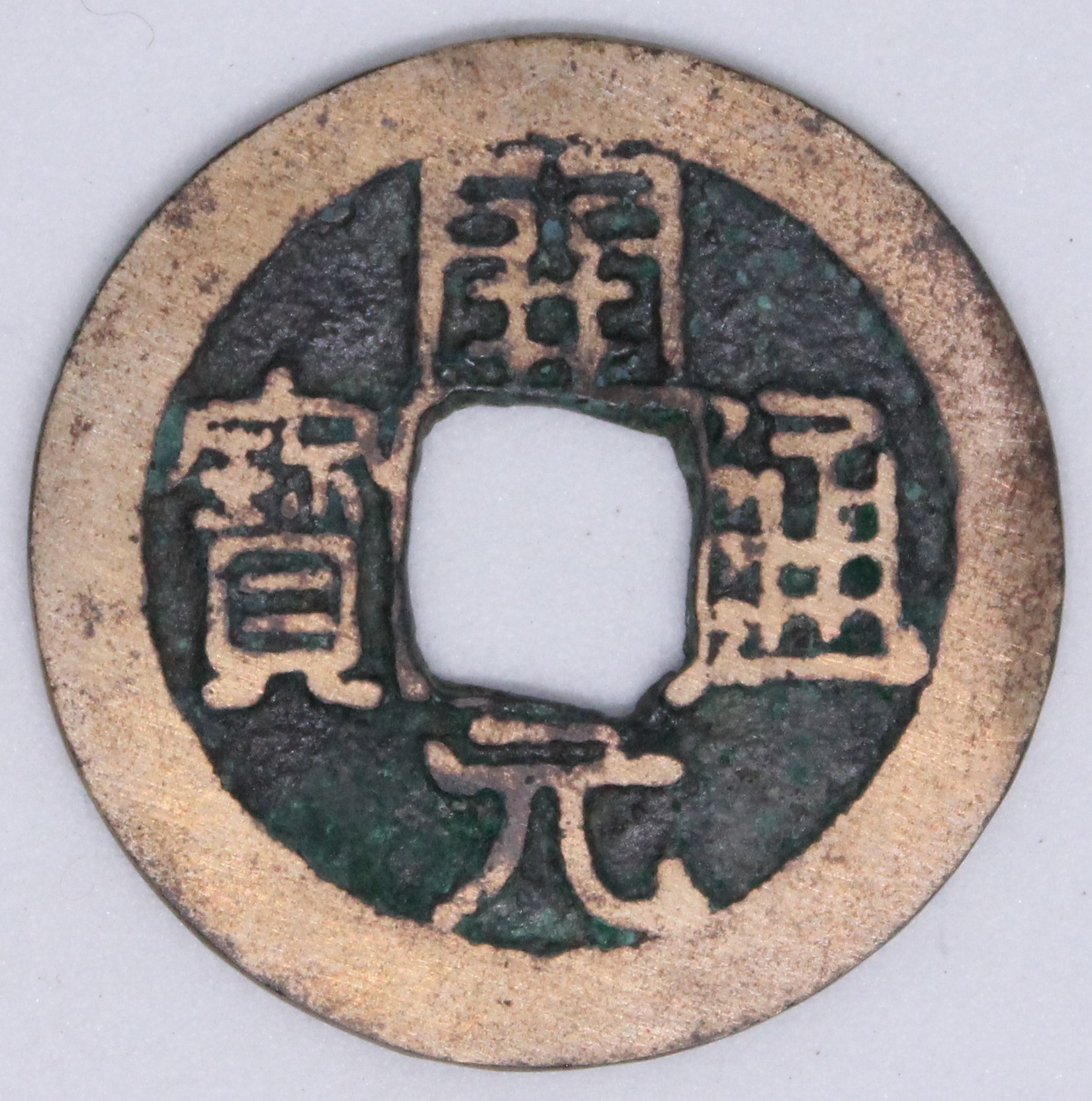 | Kaiyuan Tongbao 開元通寶 | 621AD–907AD Tang dynasty |
| No.2 | Qianfeng Quanbao 乾封泉寶 | 666AD Tang dynasty |
| No.3 | Qianyuan Zhongbao 乾元重寶 | 758AD–762AD Tang dynasty |
| No.4 | Qianheng Tongbao 乾享通寶 Qianheng Zhongbao 乾享重寶 | 917AD–942AD Southern Han |
| No.5 | Tongzheng Yuanbao 通正元寶 | 916AD Former Shu |
| No.6 | Tianhan Yuanbao 天漢元寶 | 917AD Former Shu |
| No.7 | Guangtian Yuanbao 光天元寶 | 918AD Former Shu |
| No.8 | Qiande Yuanbao 乾徳元寶 | 919AD–924AD Former Shu |
| No.9 | Xiankang Yuanbao 咸康元寶 | 925AD Former Shu |
| No.10 | Hanyuan Tongbao 漢通元寶/漢元通寶 | 948AD Later Han |
| No.11 | Zhouyuan Tongbao 周通元寶/周元通寶 | 955AD–960AD Later Zhou |
| No.12 | Datang Tongbao 大唐通寶 | 959AD Southern Tang |
| No.13 | Kaiyuan Tongbao 開元通寶 | 961AD Southern Tang |
| No.14 | Tangguo Tongbao 唐國通寶 | 959AD Southern Tang |
| No.15 | Qing Ning Tong Bao 清寧通寶 | 1055AD–1064AD Liao dynasty |
| No.16 | Xian Yong Tong Bao 咸雍通寶 | 1065AD–1074AD Liao dynasty |
| No.17 | Da Kang Tong Bao 大康通寶 | 1074AD–1084AD Liao dynasty |
| No.18 | Da An Yuan Bao 大安元寶 | 1085AD–1094AD Liao dynasty |
| No.19 | Shou Chang Yuan Bao 壽昌元寶 | 1095AD–1101AD Liao dynasty |
| No.20 | Qian Tong Yuan Bao 乾統元寶 | 1101AD–1110AD Liao dynasty |
| No.21 | Tian Qing Yuan Bao 天慶元寶 | 1111AD–1120AD Liao dynasty |
| No.22 | Song Yuan Tong Bao 宋通元寶/宋元通寶 | 960AD–976AD Song dynasty |
| No.23 | Tai Ping Tong Bao 太平通寶 | 976AD–989AD Song dynasty |
| No.24 | Chun Hua Yuan Bao 淳化元寶 | 990AD–994AD Song dynasty |
| No.25 | Zhi Dao Yuan Bao 至道元寶 | 995AD–997AD Song dynasty |
| No.26 | Xian Ping Yuan Bao 咸平元寶 | 998AD–1003AD Song dynasty |
| No.27 | Jing De Yuan Bao 景徳元寶 | 1004AD–1007AD Song dynasty |
| No.28 | Xiang Fu Tong Bao 祥符元寶 | 1008AD–1016AD Song dynasty |
| No.29 | Xiang Fu Yuan Bao 祥符通寶 | 1008AD–1016AD Song dynasty |
| No.30 | Tian Xi Tong Bao 天禧通寶 | 1017AD–1022AD Song dynasty |
| No.31 | Tian Sheng Yuan Bao 天聖元寶 | 1023–1031 Song dynasty |
| No.32 | Ming Dao Yuan Bao 明道元寶 | 1032–1033 Song dynasty |
| No.33 | Jing You Yuan Bao 景祐元寶 | 1034–1038 Song dynasty |
| No.34 | Huang Song Tong Bao 皇宋通寶 | 1039–1054 Song dynasty |
| No.35 | Zhi he Yuan Bao 至和元寶 | 1054–1055 Song dynasty |
| No.36 | Zhi he Tong Bao 至和通寶 | 1054–1055 Song dynasty |
| No.37 | Jia You Yuan Bao 嘉祐元寶 | 1056–1063 Song dynasty |
| No.38 | Jia You Tong Bao 嘉祐通寶 | 1056–1063 Song dynasty |
| No.39 | Zhi Ping Yuan Bao 治平元寶 | 1064–1067 Song dynasty |
| No.40 | Zhi Ping Tong Bao 治平通寶 | 1064–1067 Song dynasty |
| No.41 | Xi Ning Yuan Bao 煕寧元寶 | 1068–1077 Song dynasty |
| Kamakura period | 1183?AD- | |
| No.42 | Yuan Feng Tong Bao 元豐通寶 | 1078–1085 Song dynasty |
| No.43 | Yuan You Tong Bao 元祐通寶 | 1086–1094 Song dynasty |
| No.44 | Shao Sheng Yuan Bao 紹聖元寶 | 1094–1098 Song dynasty |
| No.45 | Shao Sheng Tong Bao 紹聖通寶 | 1094–1098 Song dynasty |
| No.46 | Yuan Fu Tong Bao 元符通寶 | 1098–1100 Song dynasty |
| No.47 | Sheng Song Yuan Bao 聖宋元寶 | 1101–1106 Song dynasty |
| No.48 | Chong Ning Tong Bao 崇寧通寶 | 1102–1106 Song dynasty |
| No.49 | Da Guan Tong Bao 大観通寶 | 1107–1110 Song dynasty |
| No.50 | Zheng He Tong Bao 政和通寶 | 1111–1117 Song dynasty |
| No.51 | Chong He Tong Bao 重和通寶 | 1118–1119 Song dynasty |
| No.52 | Xuan He Yuan Bao 宣和元寶 | 1119–1125 Song dynasty |
| No.53 | Xuan He Tong Bao 宣和通寶 | 1119–1125 Song dynasty |
| No.54 | Jianyan Tongbao 建炎通寶 | 1127–1130 Southern Song dynasty |
| No.55 | Shaoxing Yuanbao 紹興元寶 | 1131–1162 Southern Song dynasty |
| No.56 | Shaoxing Tongbao 紹興通寶 | 1131–1162 Southern Song dynasty |
| Muromachi Period | 1136AD- | |
| No.57 | Chunxi Yuanbao 淳煕元寶 | 1174–1189 Southern Song dynasty |
| No.58 | Shaoxi Yuanbao 紹煕元寶 | 1190–1194 Southern Song dynasty |
| No.59 | Qingyuan Tongbao 慶元通寶 | 1195–1200 Southern Song dynasty |
| No.60 | Jiatai Tongbao 嘉泰通寶 | 1201–1204 Southern Song dynasty |
| No.61 | Kaixi Tongbao 開禧通寶 | 1205–1207 Southern Song dynasty |
| No.62 | Jiading Tongbao 嘉定通寶 | 1208–1224 Southern Song dynasty |
| No.63 | Dasong Yuanbao 大宋元寶 | 1225–1227 Southern Song dynasty |
| No.64 | Shaoding Tongbao 紹定通寶 | 1228–1233 Southern Song dynasty |
| No.65 | Duanping Yuanbao 端平元寶 | 1234–1236 Southern Song dynasty |
| No.66 | Jiaxi Tongbao 嘉煕通寶 | 1237–1240 Southern Song dynasty |
| No.67 | Chunyou Yuanbao 淳祐元寶 | 1241–1252 Southern Song dynasty |
| No.68 | Huangsong Yuanbao 皇宋元寶 | 1253–1258 Southern Song dynasty |
| No.69 | Kaiqing Tongbao 開慶通寶 | 1259 Southern Song dynasty |
| No.70 | Jingding Yuanbao 景定元寶 | 1260–1264 Southern Song dynasty |
| No.71 | Xianchun Yuanbao 咸淳元寶 | 1265–1274 Southern Song dynasty |
| No.72 | Tian Sheng Yuan Bao 天盛元寶 | 1149–1169 Western Xia dynasty |
| No.73 | Huang Jian Yuan Bao 皇建元寶 | 1210–1211 Western Xia dynasty |
| No.74 | Zheng Long Yuan Bao 正隆元寶 | 1158–1161 Jin dynasty |
| No.75 | Da Ding Tong Bao 大定通寶 | 1178–1189 Jin dynasty |
| No.76 | Zhida Tongbao 至大通寶 | Yuan dynasty |
| No.77 | Zhizheng Tongbao 至正通寶 | Yuan dynasty |
| No.78 | Tianyou Tongbao 天佑通寶 | 1354–1357 Rebels of the Yuan dynasty |
| No.79 | Dayi Tongbao 大義通寶 | 1360–1361 Rebels of the Yuan dynasty |
| No.80 | Dazhong Tongbao 大中通寶 | 1361–1393 Ming dynasty |
| No.81 | Xuande Tongbao 宣徳通寶 | 1426–1435 Ming dynasty |
Hongwu Tongbao (洪武通宝) 1368AD-
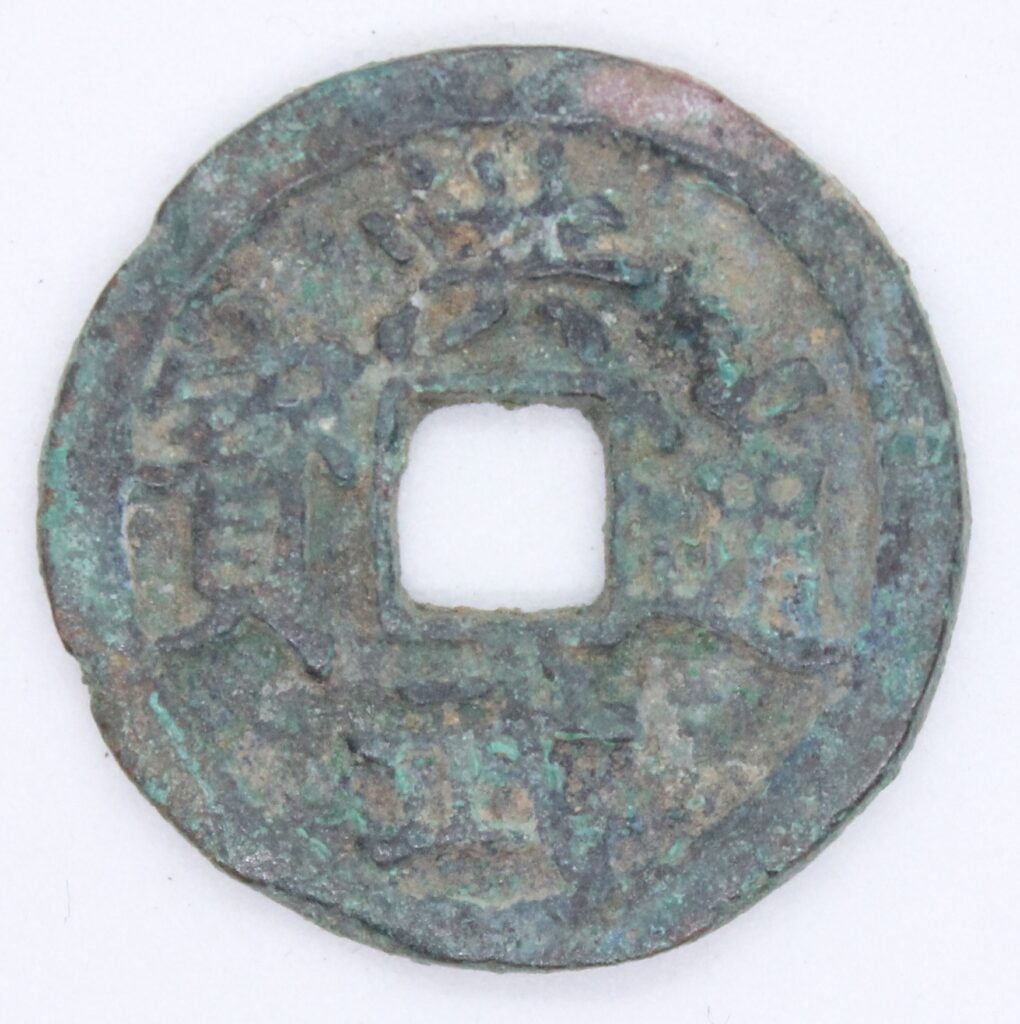
Copper coins cast during the Hongwu era (1368–98) of the Ming Dynasty in China. A significant quantity was imported during the Muromachi period and used as currency alongside Yongle coins. By the late Muromachi period, imitations of imported coins were cast in various regions. Among these, the Kajiki coins from Osumi Province are particularly famous in Japan as imitations of Hongwu coins.
Yongle Tongbao (永楽通宝) 1411AD-
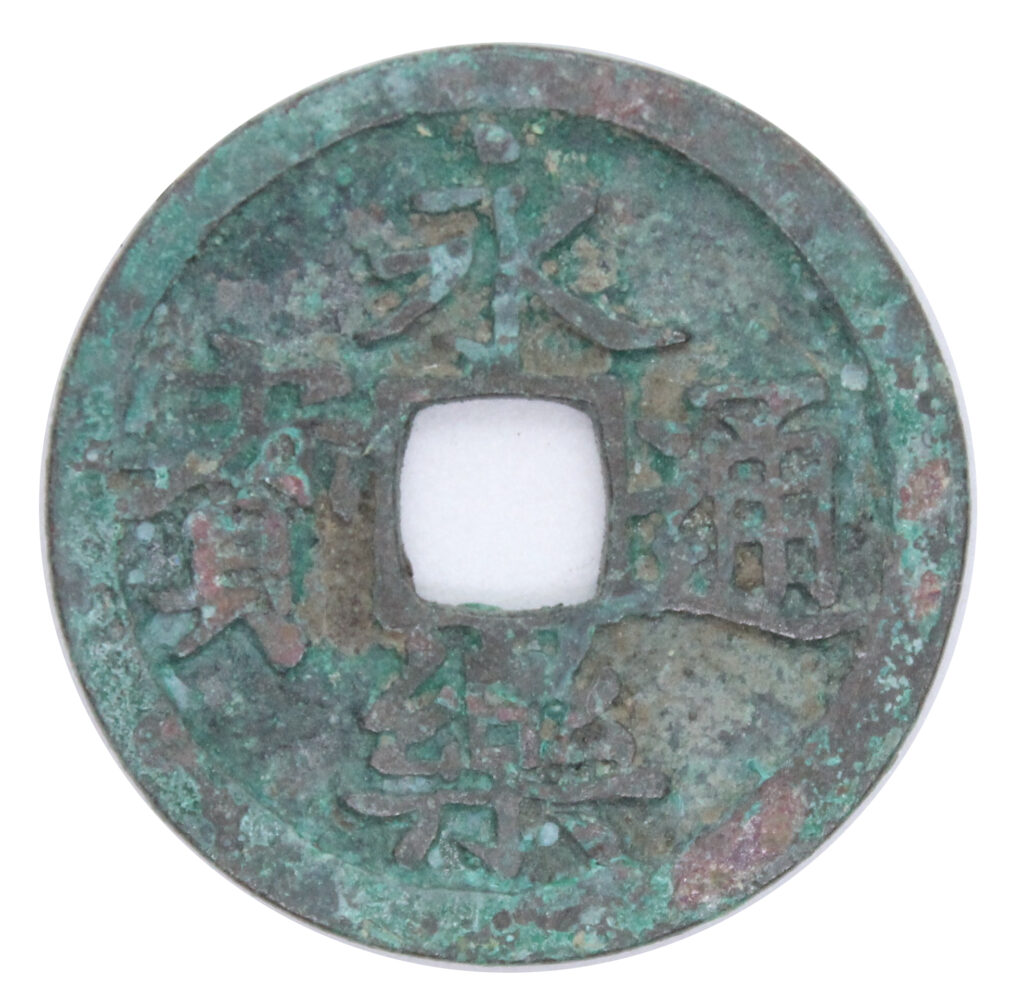
The Yongle Tongbao is a copper coin first minted in the 9th year of the Yongle era (1411) during the reign of the Yongle Emperor, the third emperor of China’s Ming Dynasty. It was imported in large quantities into Japan during the Muromachi period and circulated there until the early Edo period. The Yongle Tongbao is believed to have been used extensively beyond China’s borders. Within Japan, it is thought that numerous Yongle Tongbao coins, in addition to those imported, were also privately minted and circulated.
In 1670 (Kanbun 10), the Edo shogunate banned the use of any coins other than the Kan’ei Tsuho within Japan.
However, in practice, these other coins continued to be used by the general public, often mixed in with bundles of 100 Kan’ei Tsuho coins.
In addition, new Chinese coins and others were imported through Nagasaki, a major trading port, often mixed in with payments, and were used as part of the currency.
.jpg)

.jpg)
.jpg)
| No. | Source | Period minted |
| JNDA#09-1 Tenshō-Hishi Ōban Kin 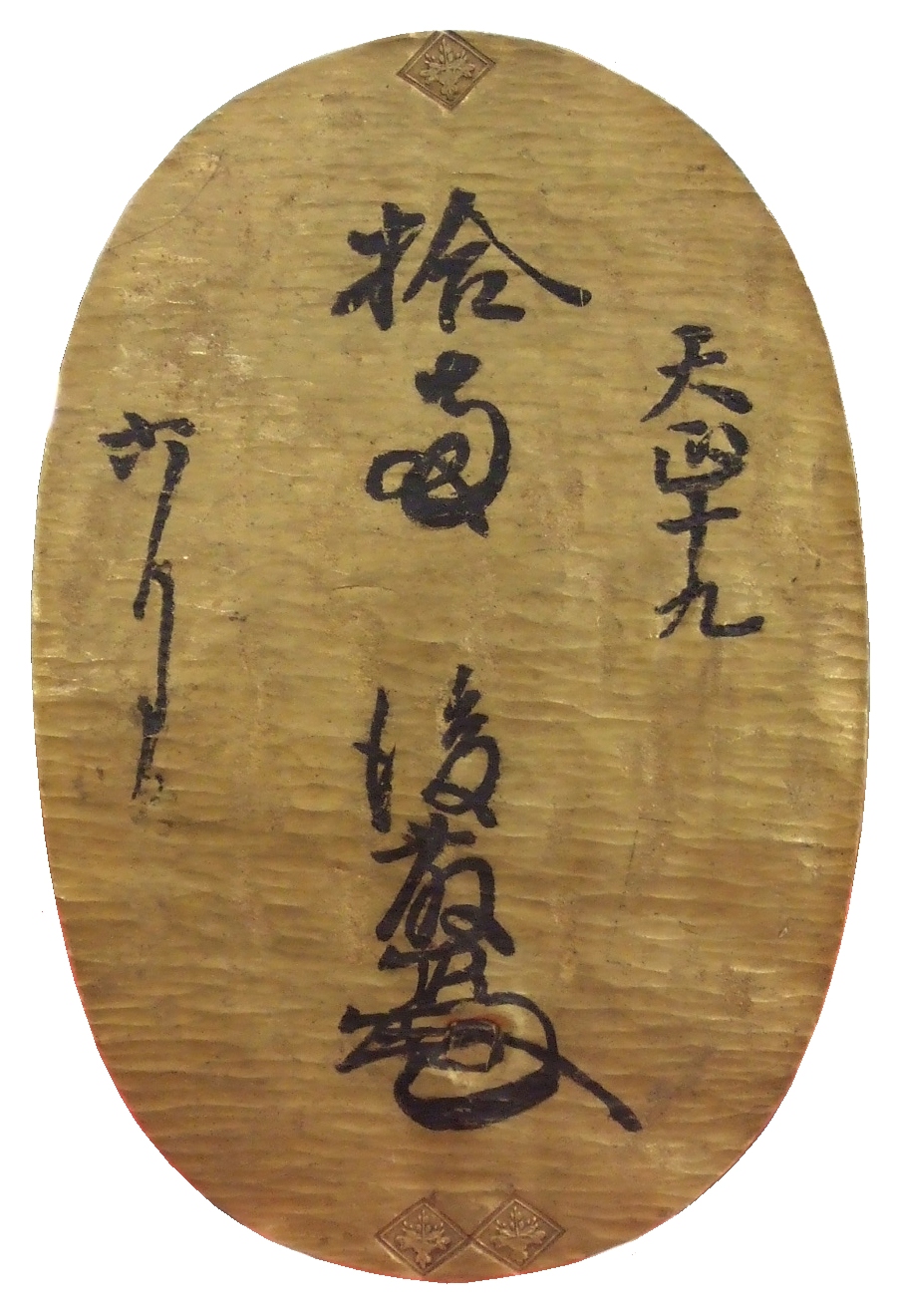 | Tensho-hishi-oban(gold oban):As6673 CC BY-SA 3.0 https://commons.wikimedia.org/wiki/File:Tensho-hishi-obankin.jpg | Tenshō-Hishi Ōban Kin 天正菱大判金 1573-1591 |
| JNDA#09-2 Tenshō-naga Ōban Kin | Tenshō-naga Ōban Kin 天正長大判金 1573-1591 | |
| JNDA#09-3 Tenshō Ōban Kin 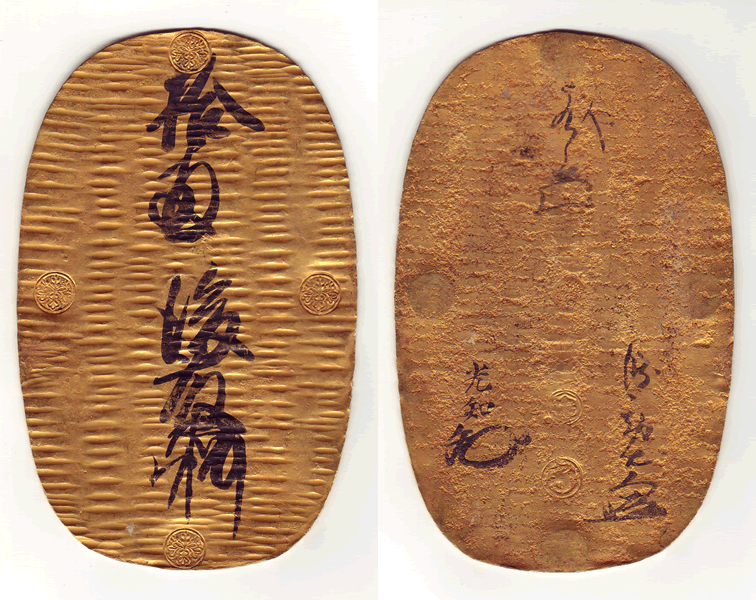 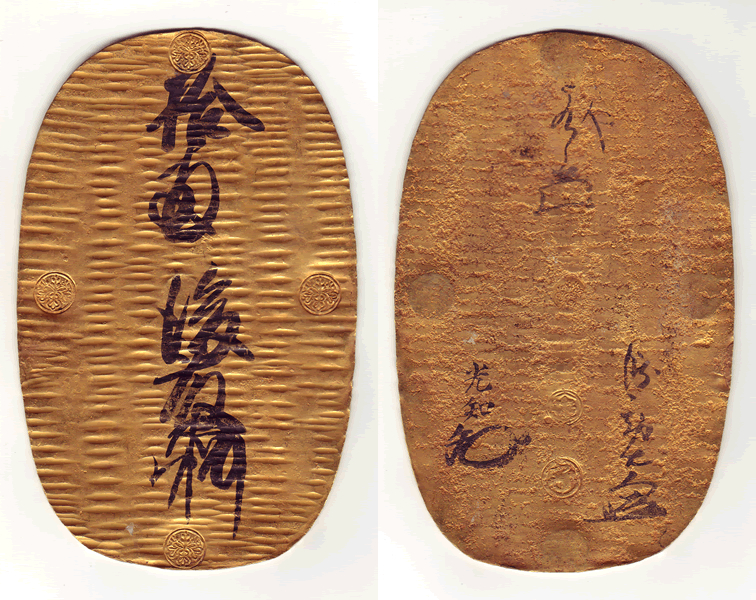 | Old money of Japan, Tensho oban, 天正大判金:divetobluemarine CC BY-SA 3.0 https://commons.wikimedia.org/wiki/File:Tensho_oban.jpg | Tenshō Ōban Kin 天正大判金 1573-1609 |


| No. | Source | Period minted |
| JNDA#09-4 Keichō-Sasagaki Ōban Kin 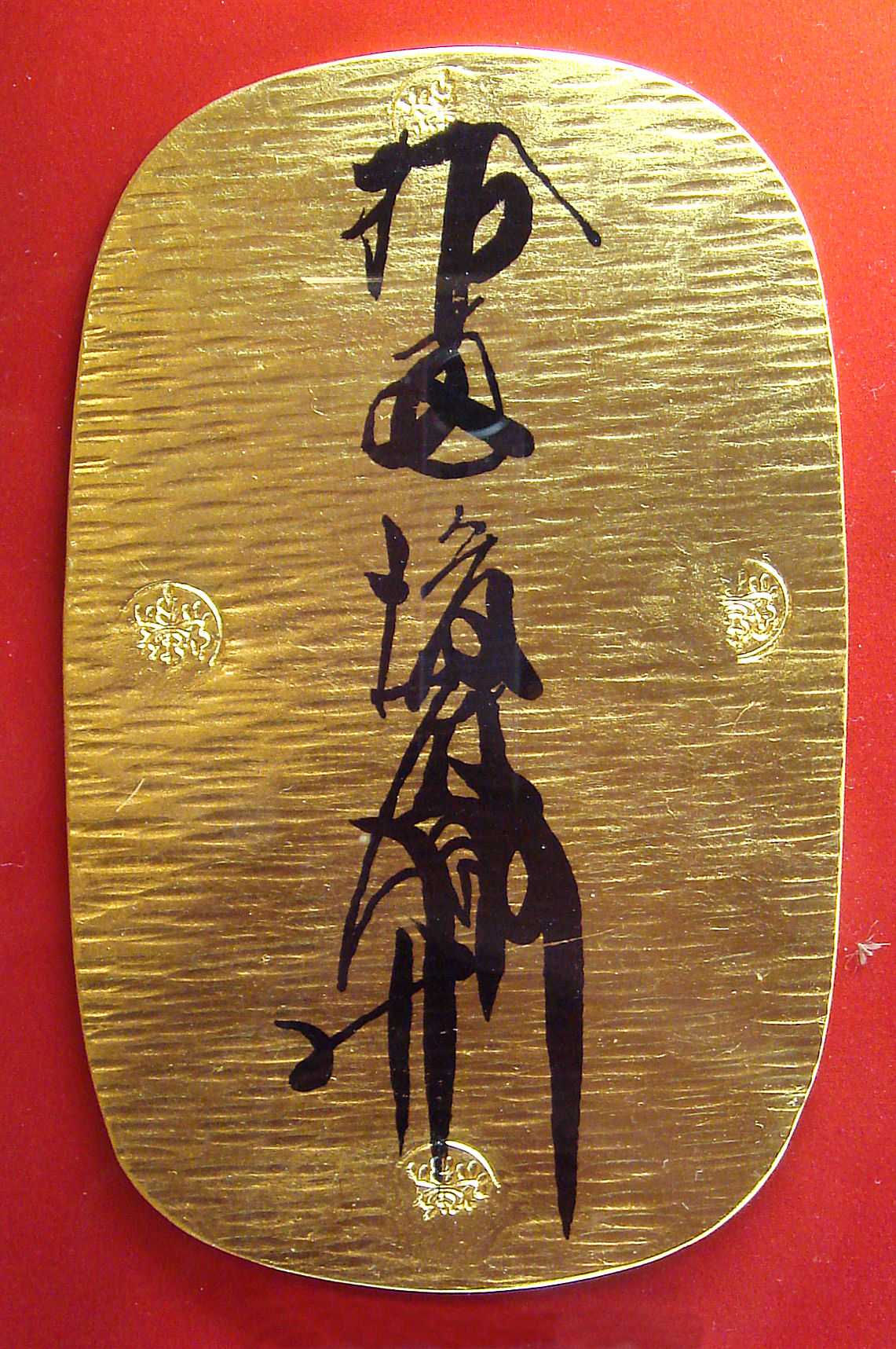 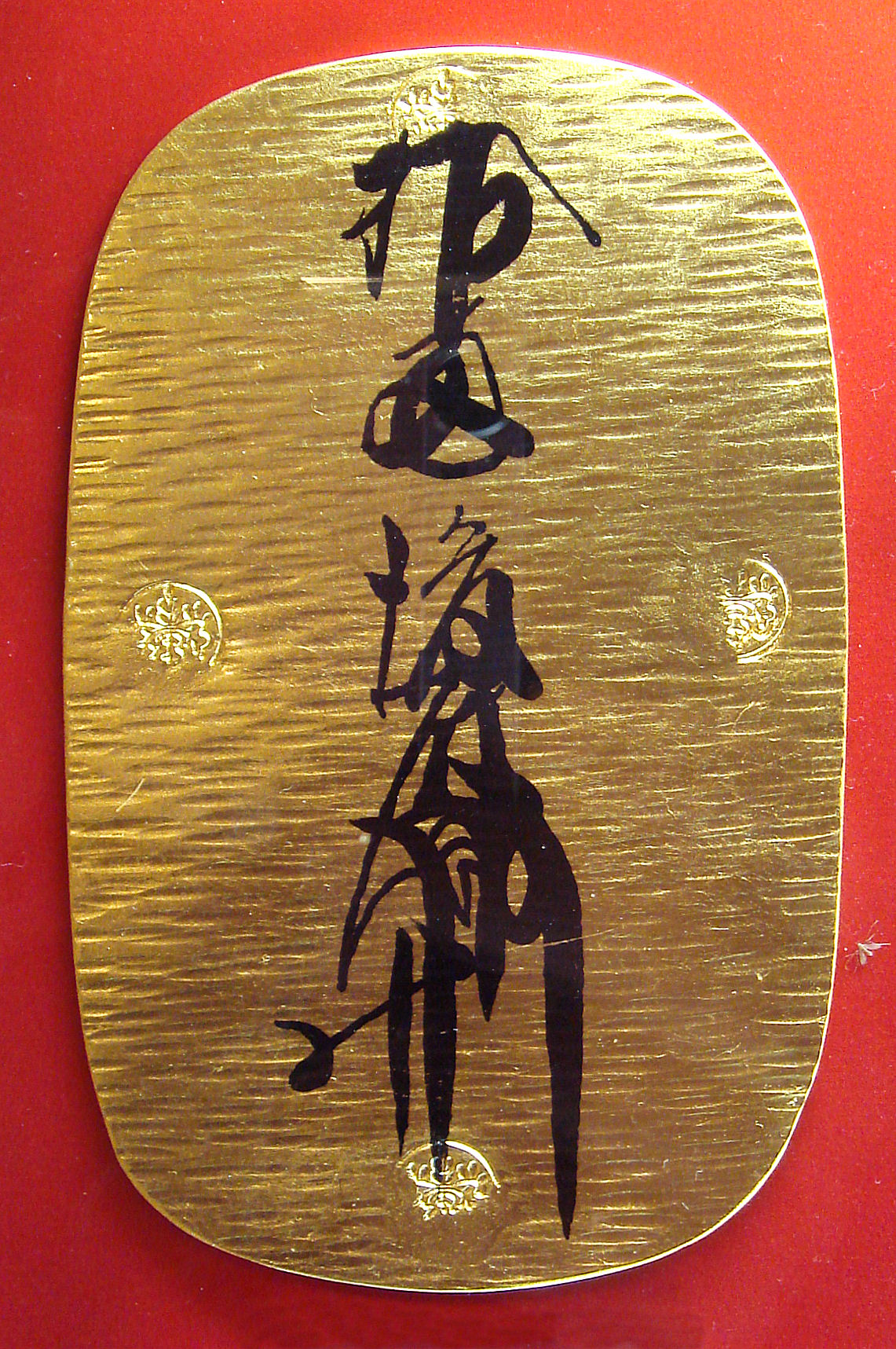 | Keicho_Oban_1601-:PHGCOM CC BY-SA 3.0 https://commons.wikimedia.org/wiki/File:Keicho_Oban_1601.jpg | Keichō-Sasagaki Ōban Kin 慶長笹書大判金 1601- |
| JNDA#09-5 Keichō Ōban Kin 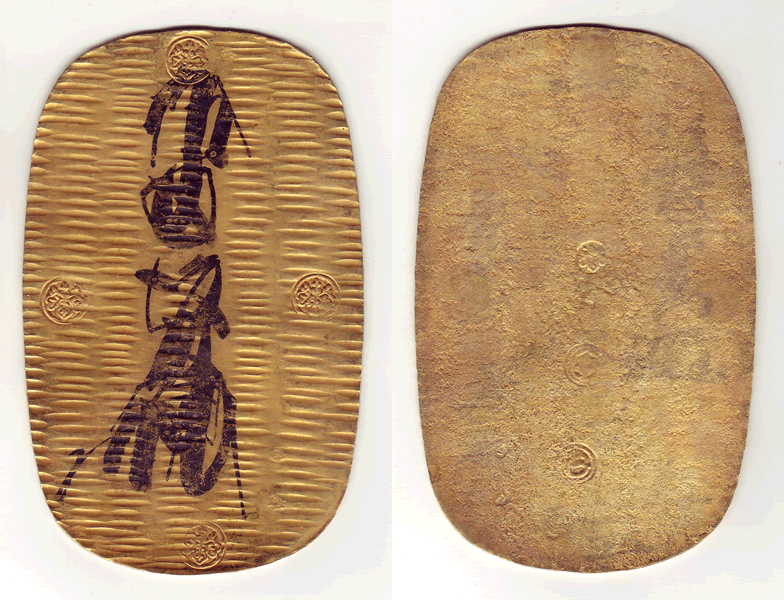 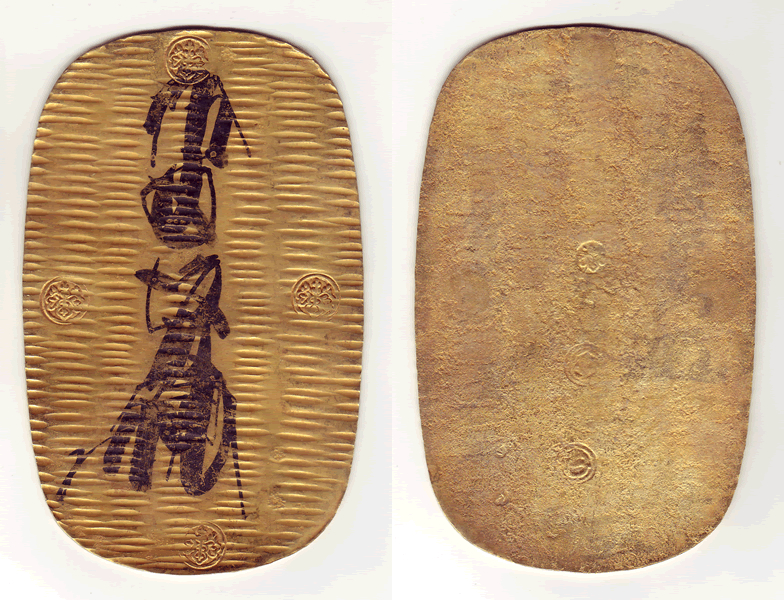 | Old money of Japan, Keicho oban, 慶長大判金:divetobluemarine CC BY-SA 3.0 https://commons.wikimedia.org/wiki/File:Keicho_oban.jpg | Keichō Ōban Kin 慶長大判金 1601- |
| JNDA#09-6 Keichō Ōban Kin (Meireki ban) | Keichō Ōban Kin (Meireki ban) 慶長大判金 (明暦判) 1658- |


| No. | Source | Period minted |
| JNDA#09-7 Genroku Ōban Kin | Genroku Ōban Kin 元禄大判金 1695-1716 |
| No. | Source | Period minted |
| JNDA#09-8 Kyōho Ōban Kin | Kyōho Ōban Kin 享保大判金 1725-1837 |
| No. | Source | Period minted |
| JNDA#09-9 Tenpo Ōban Kin | Tenpo Ōban Kin 天保大判金 1838-1860 |
| No. | Source | Period minted |
| JNDA#09-10 Man-en Ōban Kin (Chisel work) | Man-en Ōban Kin 万延大判金 たがね打ち 1860-1862 | |
| JNDA#09-11 Man-en Ōban Kin (Rolling pin) | Man-en Ōban Kin 万延大判金 のし目打ち 1860-1862 |
Edo Period 1603AD-
Keichō Tsūhō(慶長通宝) 1606AD
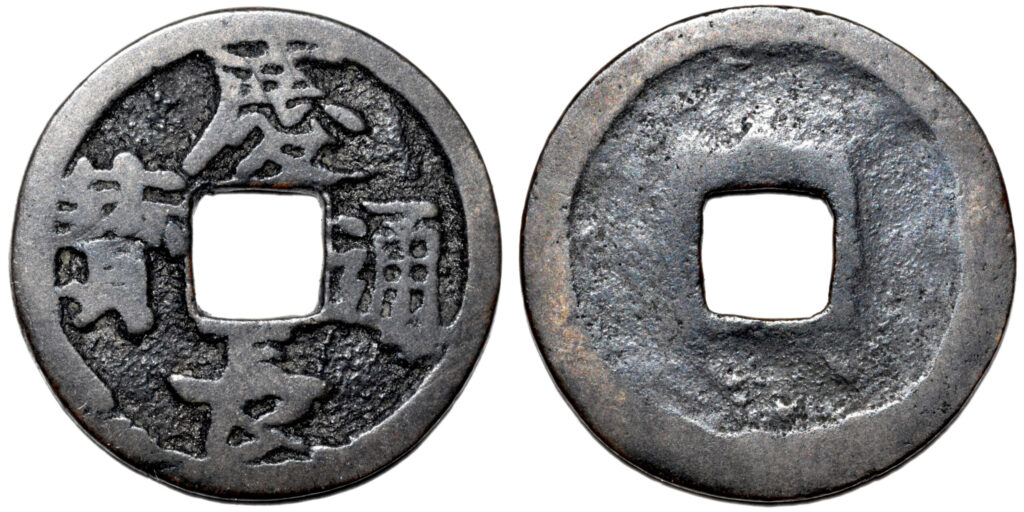
A “Keichō-tsūhō” coin of the Tokugawa shogunate, 1606.
CC BY-SA 4.0
A “Keichō-tsūhō” coin valued at 1 mon, Tokugawa shogunate of Japan, 1606; Mito mint, Hitachi Province. Size: 22mm; weight: 2.53g. Reference: Hartill 3.40. Cherrygarden collection, ex Stephen Album Rare Coins (Auction 39, Lot 3399).
https://commons.wikimedia.org/wiki/File:Keicho_Tsuho.jpg

The Keichō Tsūhō was a copper coin issued by the Edo shogunate in Keichō 11 (1606) (though some theories differ). It is considered Japan’s first centrally minted currency since the Imperial Twelve Coins of the Heian period, ending a long hiatus.
Kan’ei Tsūhō(寛永通宝) 1636AD-
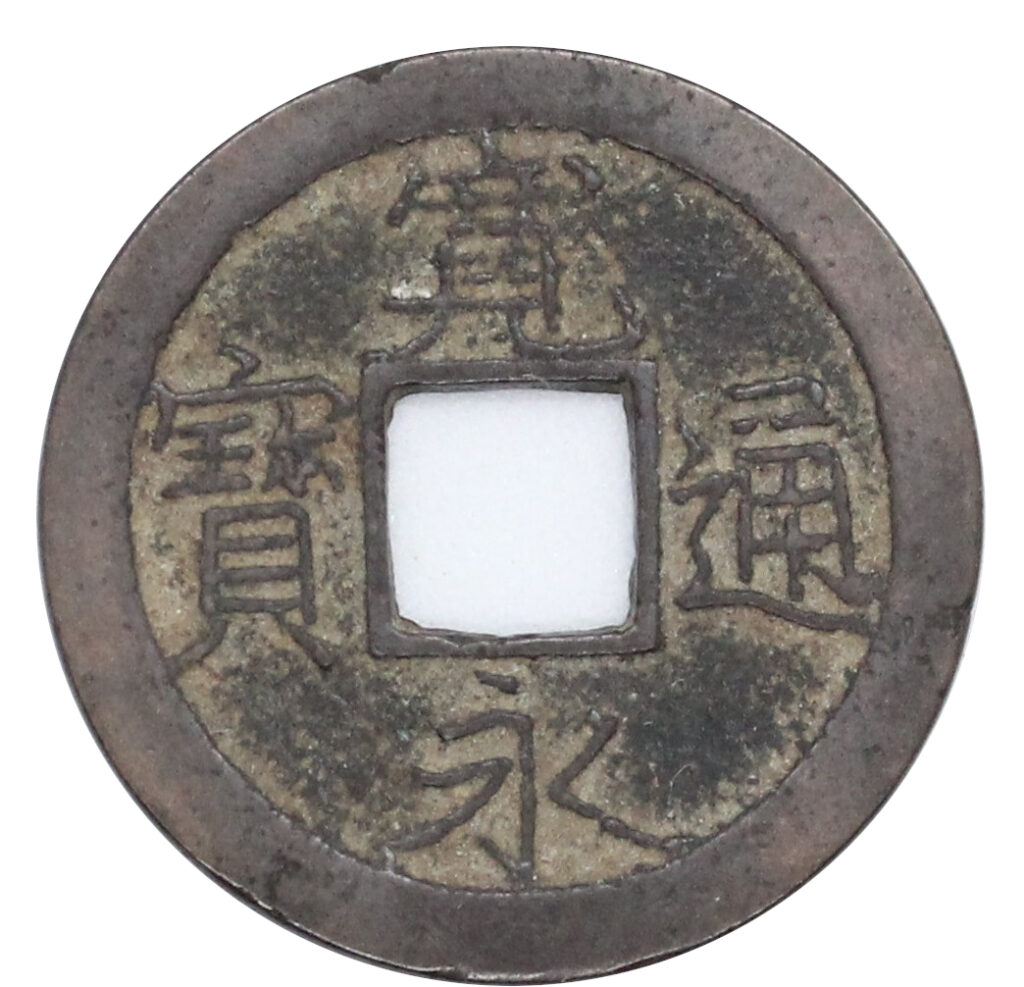
Kan’ei Tsuuho was a widely circulated coin during the Edo period in Japan.
It was first minted in 1636 and continued to be minted until the end of the Edo period.
The classification by age is mainly divided into two categories, which are called”Ko(Old)-Kanei Sen” and “Shin(New)-Kanei Sen”.
(Please have a look at the link below.)
⇒Page about the classification of Shin(New)-Kanei Sen(coin)
| Niji-Eiji / Niji-Hoei 1707 |
| Hoei-Tsuho 1708 |
| Bunkyu-Eiho 1863- | 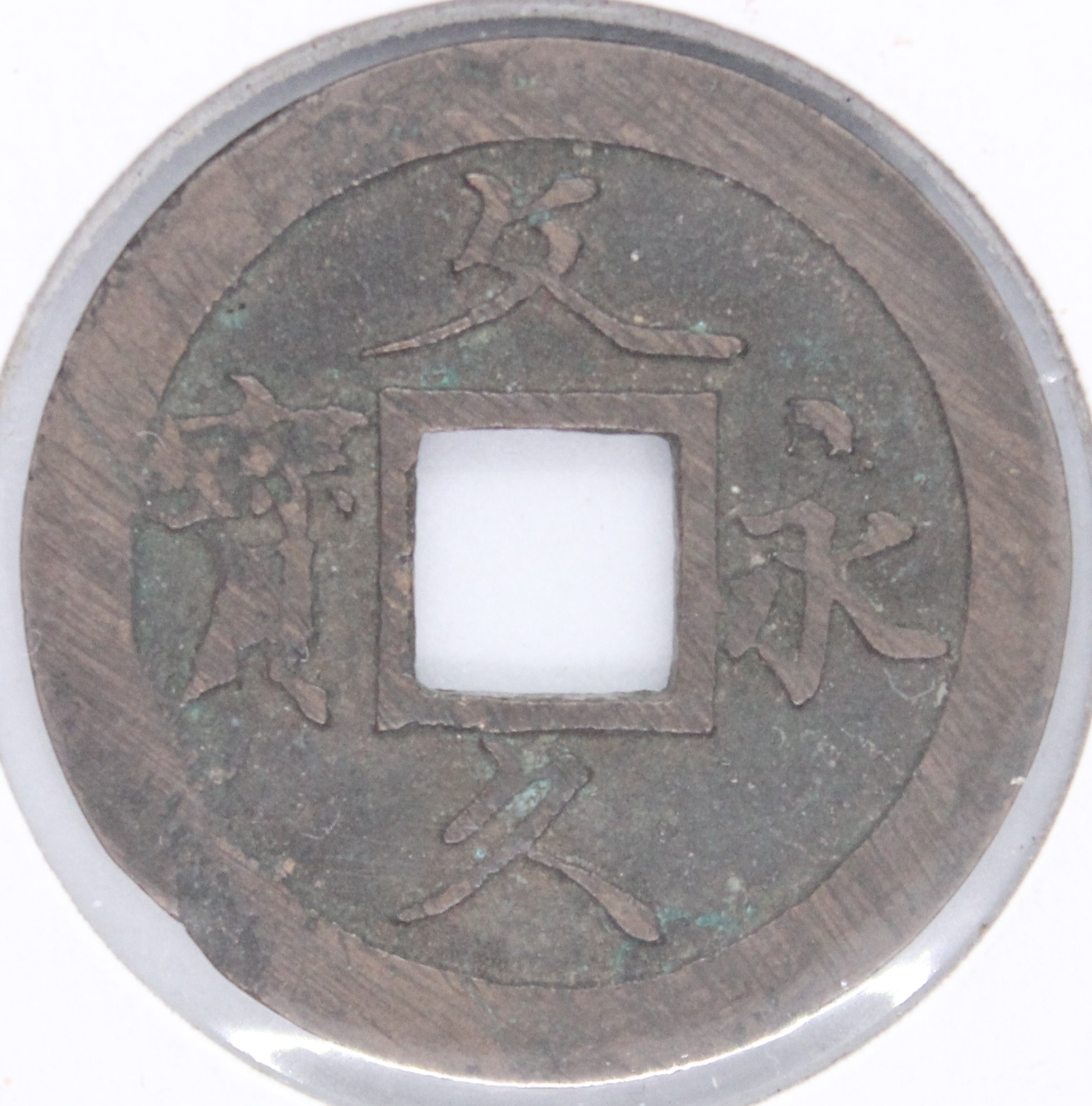 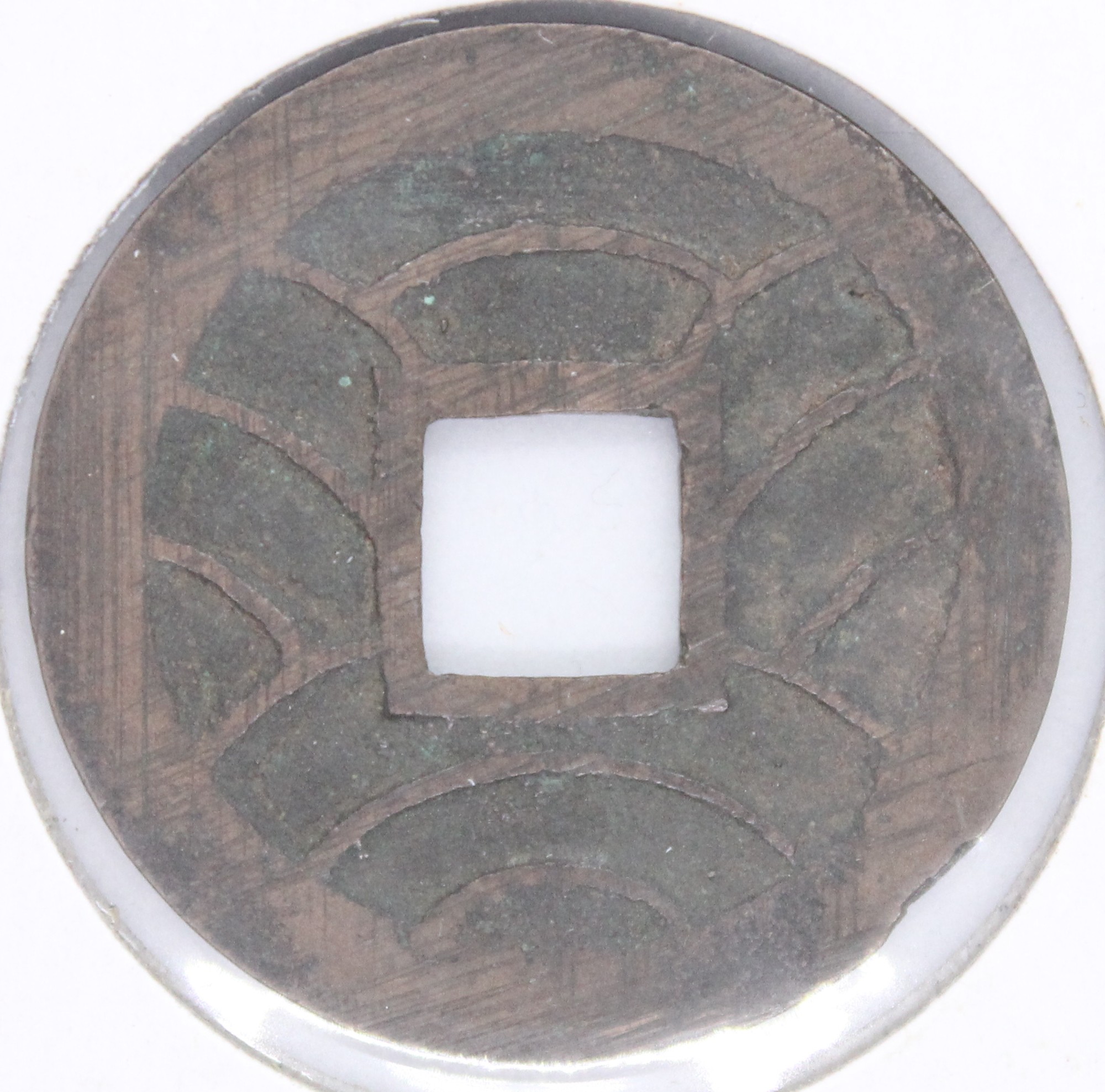 |
| JNDA#09-50,51,52 1Bu-Gin | 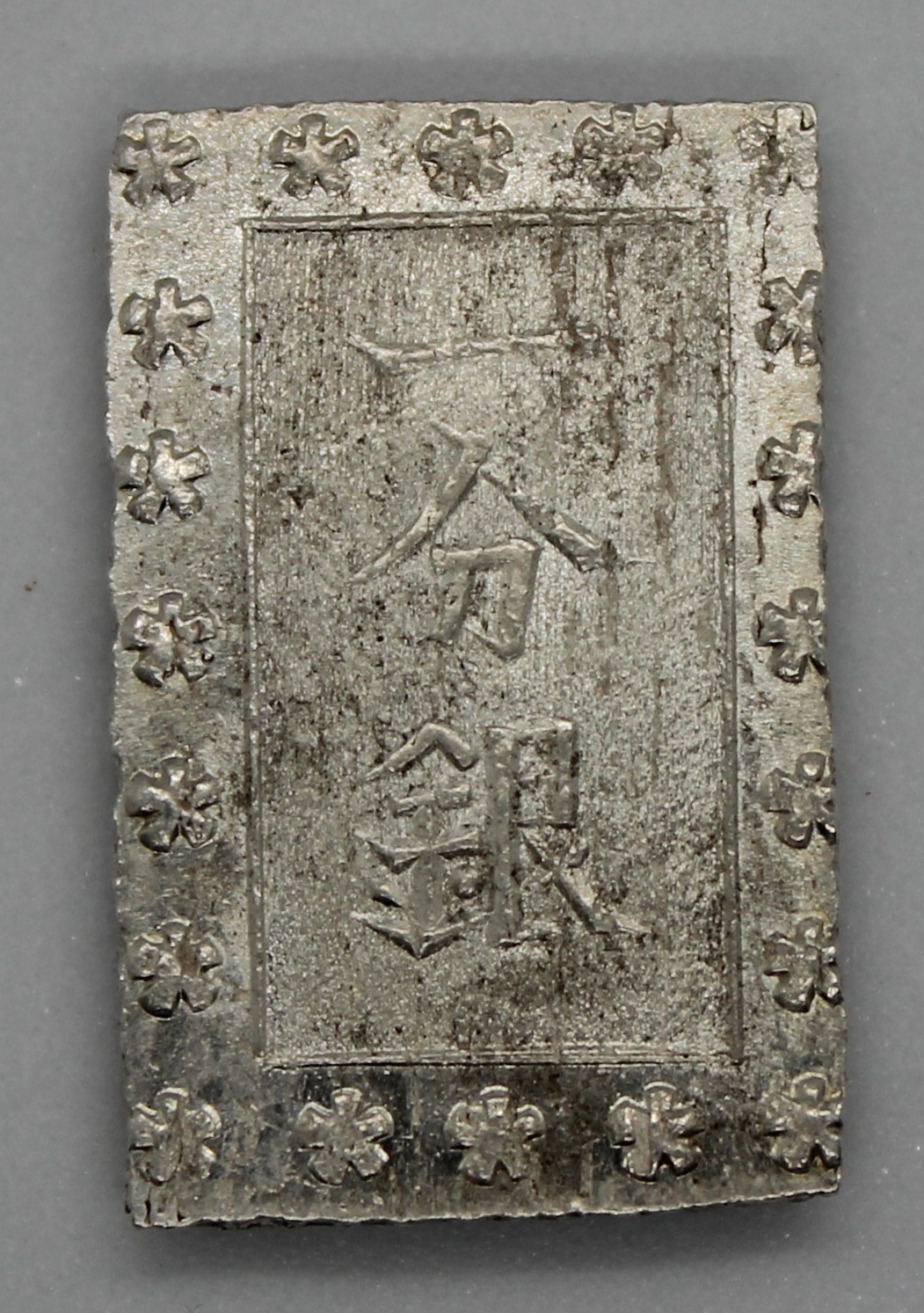 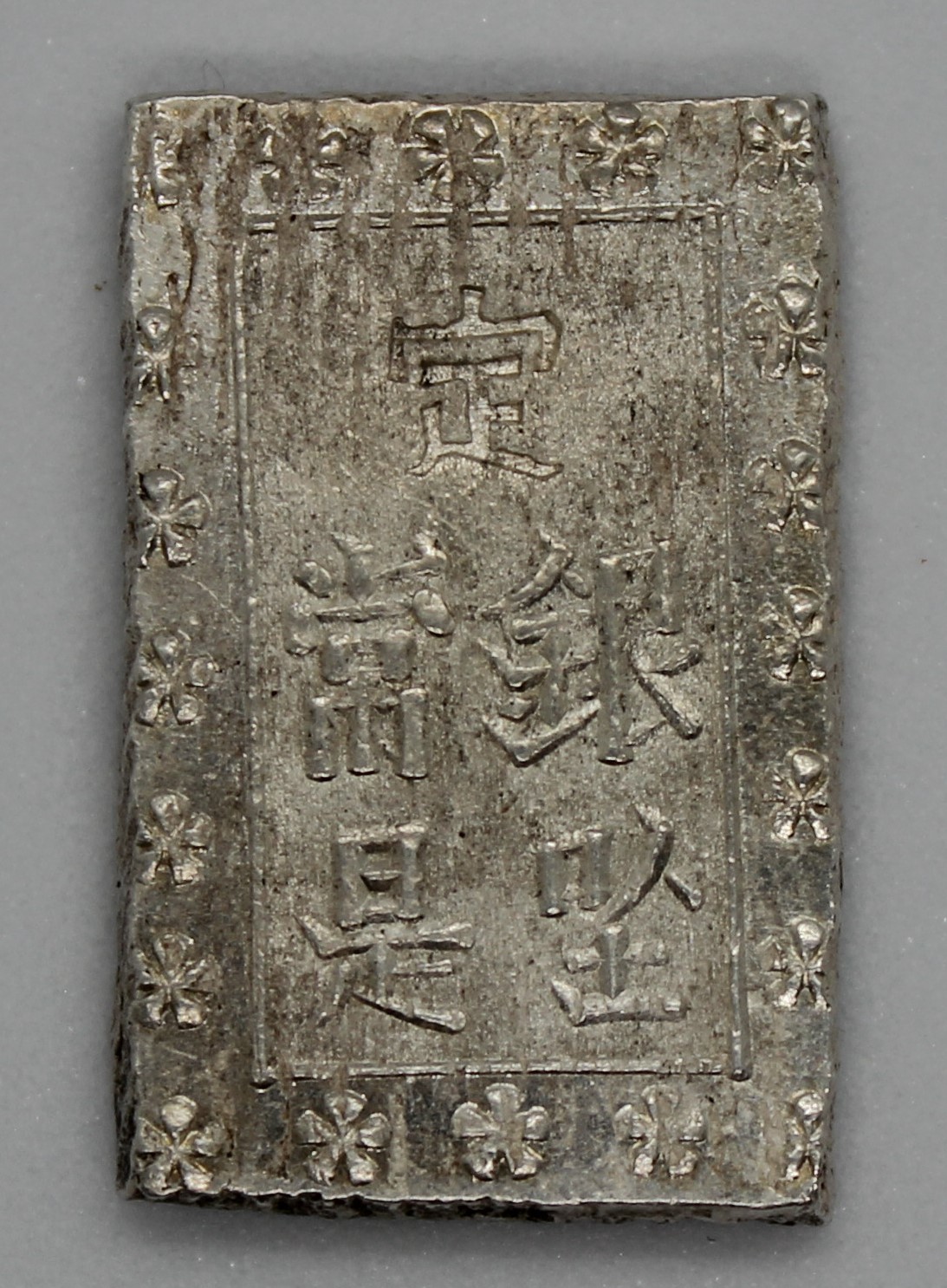 | |
Tenpo Tsuho(天保通宝) 1835AD-1891AD
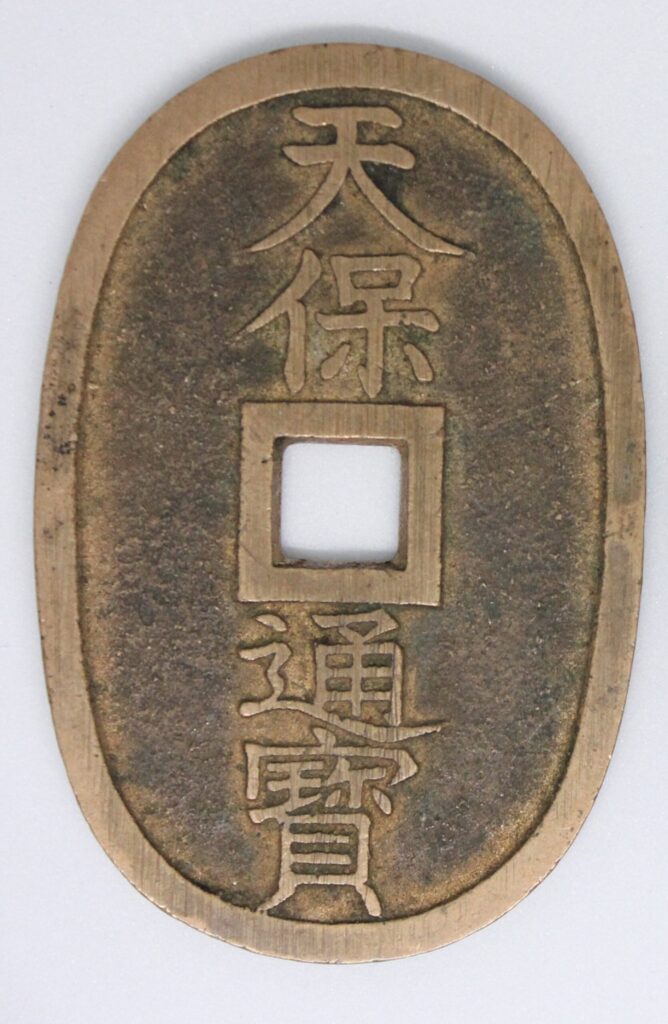
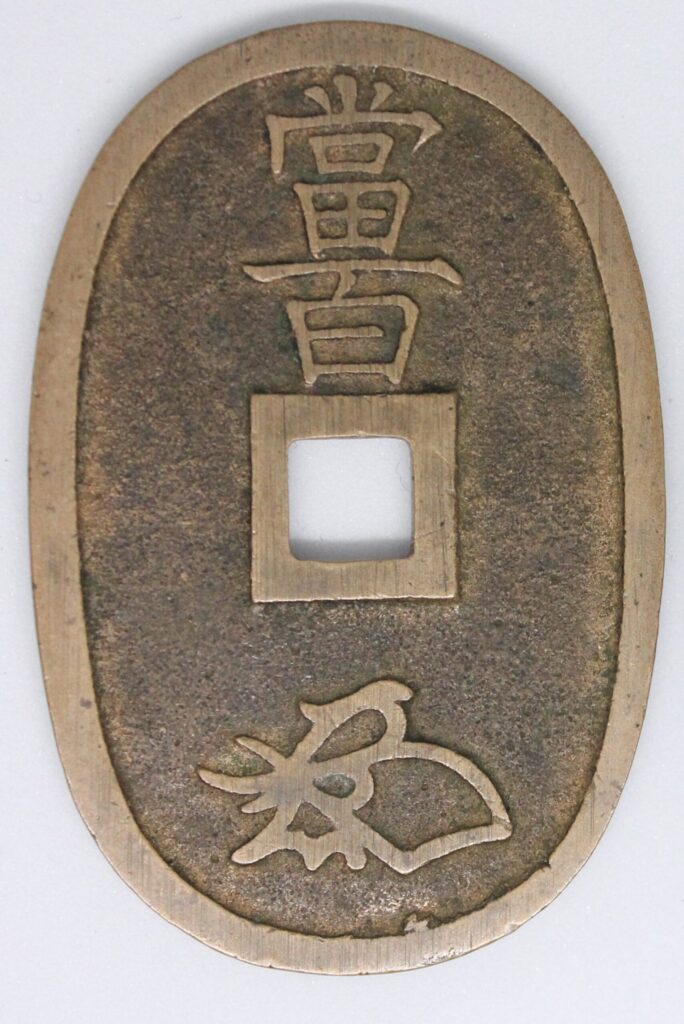
The Tenpō Tsūhō was a coin that circulated in Japan from the late Edo period to the early Meiji period. It was first minted in Tenpō 6 (1835).
Local currency
Daiba Tsuho (台場通宝)
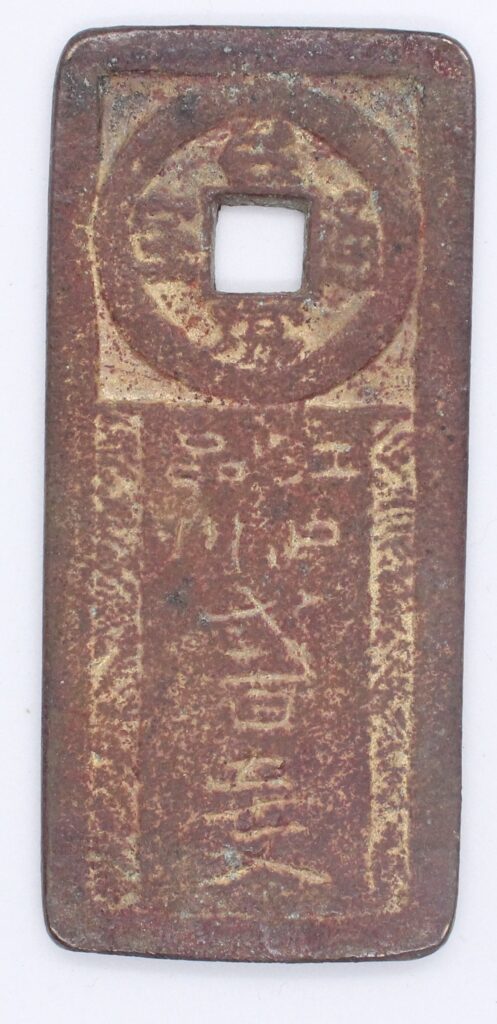
These coins are said to have been provided to craftsmen during the construction of the Odaiba at the end of the Edo period.
It is an unidentified coin that we do not know if it ever really existed.
(Please have a look at the link below.)
⇒Daiba Tsuho 250 Mon Coin imaginary money Japanese Old Coin
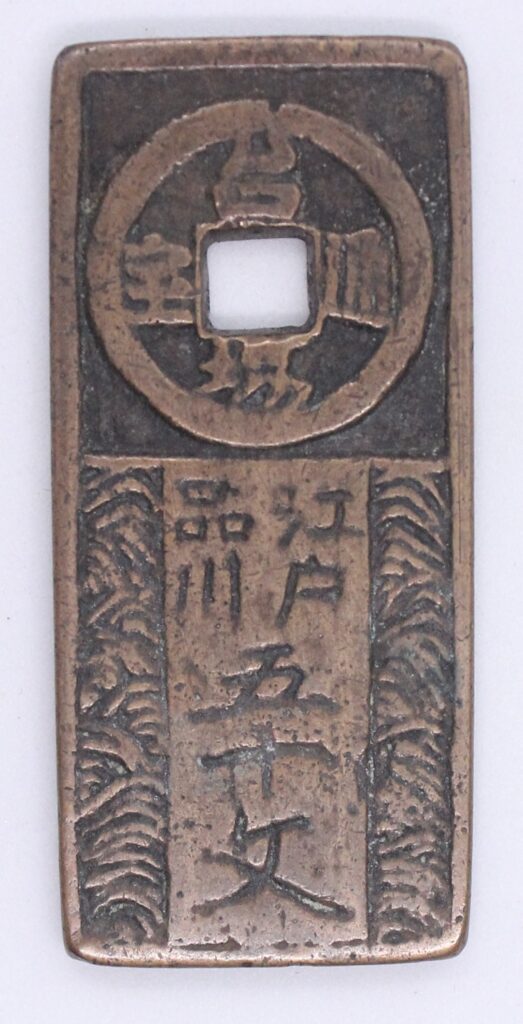
This is the 50-mon version of the Odaiba Tōhō coin. It is slightly smaller than the 250-mon coin.
(Please have a look at the link below.)
⇒Daiba Tsuho 50 Mon Coin imaginary money Japanese Old Coin
Exhibited at the National Museum of Japanese History.
https://upload.wikimedia.org/wikipedia/ja/4/47/%E7%84%A1%E6%96%87%E9%8A%80%E9%8A%AD_%28%E8%A4%87%E8%A3%BD%29.JPG ↩︎
